Steel garden furniture and how to choose a durable outdoor finish

Steel garden furniture is mainly a finish decision
Steel garden furniture is worth considering when a project needs strength, slim profiles, good wind stability and a wide choice of colors. Outdoor performance, however, depends less on the steel label itself and more on how the metal is protected. Plain carbon steel will corrode when moisture and oxygen reach the surface, so durable outdoor pieces normally rely on a protective coating system such as outdoor-grade powder coating, galvanizing, or a combination of zinc protection and coating.
For a covered patio, powder-coated steel may be practical. For a coastal garden, humid courtyard or year-round exposed site, buyers should ask more detailed questions about pretreatment, coating coverage, drainage and repairability before choosing steel over aluminum, stainless steel or wood.
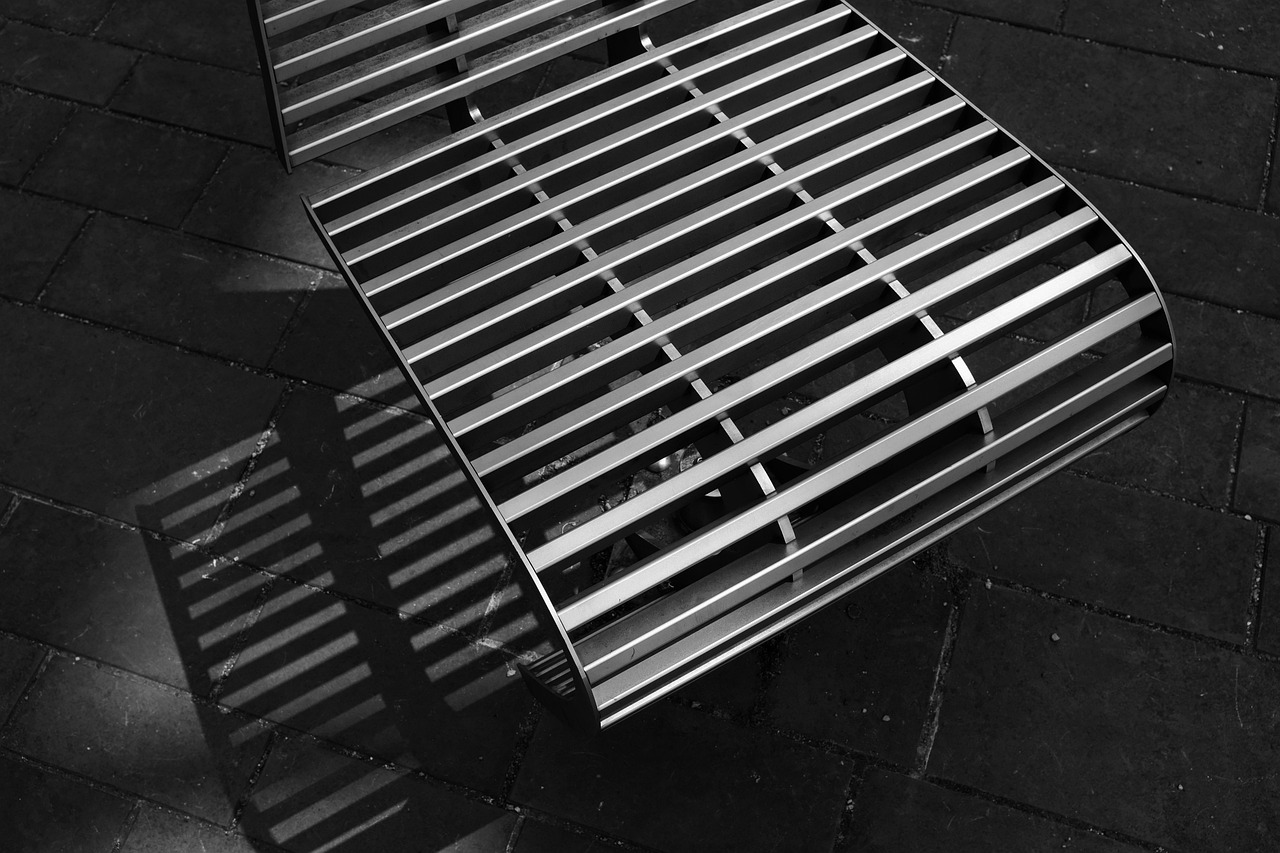
For more material comparisons and specification ideas, visit the furniture materials section.
What steel means in outdoor furniture
In garden furniture, steel usually means carbon steel tubing, sheet, rod or mesh that has been shaped, welded and finished. It is different from stainless steel, which contains alloying elements that improve corrosion resistance. It is also different from aluminum, which is lighter and does not rust in the same way as iron-based metals.
Carbon steel remains common in benches, bistro sets, café chairs, public-space tables and decorative garden pieces because it is strong for its section size. Designers can use thin legs, wire seats, perforated sheet, folded plate and curved frames without making the item feel fragile. Steel also adds mass, which can be useful on windy terraces or in commercial outdoor areas where very light furniture may move too easily.
The trade-off is corrosion risk. If rainwater, condensation, salt spray or damp soil reaches unprotected steel, rust can begin at scratches, cut edges, bolt holes, welds and underside contact points. This does not mean steel is unsuitable outdoors. It means the specification should focus on the full protection system rather than a simple material label.
The main outdoor protection systems
Powder-coated steel
Powder coating is a dry finishing process in which powdered resin is applied to a prepared metal surface and then cured into a continuous film. Environmental guidance from agencies and coating industry groups commonly describes powder coating as a low-solvent or no-liquid-solvent process compared with many traditional liquid coatings. For furniture, the practical benefit is a hard, decorative barrier that can be produced in many colors and textures.
The limitation is that powder coating is still a barrier coating. If the film is chipped, cracked or poorly bonded, water can reach the steel beneath it. Rust may then creep from the damaged point, especially around welds, feet, fasteners and sharp edges where coatings can be thinner or more vulnerable. Good powder-coated steel furniture should show even coverage, smooth curing, no obvious pinholes and careful treatment around joints and undersides.
Galvanized steel
Galvanizing protects steel with zinc. In hot-dip galvanizing, fabricated steel is coated with zinc after suitable surface preparation. Standards such as ASTM A123 are widely referenced for hot-dip galvanized coatings on iron and steel products, including requirements related to coating thickness, finish, appearance and adherence. For outdoor furniture, galvanizing can improve corrosion resistance because zinc helps protect exposed steel areas more actively than a simple paint barrier.
Galvanized finishes may be left visible for an industrial look, or they may sit beneath a decorative coating. The visual result can vary, and designers need to account for venting, drainage, surface smoothness and finish expectations before fabrication. Not every delicate furniture detail is equally suitable for galvanizing, so the process should be planned early rather than added as an afterthought.
Duplex protection
A duplex system combines zinc protection with a paint or powder-coated top layer. In outdoor furniture, this often means galvanized steel plus powder coating. The zinc layer provides corrosion protection under the decorative finish, while the topcoat adds color, texture and an additional moisture barrier. This approach is often more appropriate for exposed gardens, hospitality terraces and public spaces than a thin coating over bare steel.
However, a duplex system is only as reliable as its preparation and compatibility. The galvanized surface must be properly cleaned and treated so the topcoat adheres. Drainage holes, seams and concealed cavities still matter. A product described as galvanized and powder coated should not be accepted on wording alone; buyers should ask what standard, pretreatment and test evidence apply.
Match the finish to the exposure environment
Outdoor furniture does not face the same conditions everywhere. A chair under a covered balcony in a dry inland climate has a different risk profile from a bench near a swimming pool or a table on a coastal promenade. ISO 12944, a widely used corrosion-protection standard for steel structures, classifies atmospheric corrosivity environments and reinforces an important principle for furniture buyers: the environment should drive the coating choice.
| Outdoor setting | Main risk | Practical steel furniture approach |
|---|---|---|
| Covered patio or balcony | Occasional moisture, dust and condensation | Well-pretreated powder-coated steel may be suitable if scratches are repaired quickly. |
| Open garden in a moderate climate | Rain, UV exposure, soil splash and seasonal humidity | Outdoor-grade powder coating with good drainage and protected feet is the minimum to look for. |
| Humid or rainy region | Long wet periods and slower drying | Galvanized steel, duplex coating or stainless alternatives may offer better risk control. |
| Coastal area or poolside | Salt, chlorides and frequent surface deposits | Specify galvanized plus suitable topcoat, marine-grade stainless steel, or aluminum depending on budget and design. |
| Public or commercial outdoor space | Heavy use, movement, vandalism and cleaning chemicals | Ask for structural testing, coating data, replaceable parts and a maintenance plan. |
This exposure-based approach helps avoid two common mistakes. The first is assuming any powder-coated steel is automatically weatherproof. The second is rejecting steel entirely when a more robust coating system could meet the project need. The right question is not simply whether steel is good outdoors; it is whether this steel construction and finish are suitable for this location.
What to inspect before buying or specifying
A useful inspection starts with the areas that usually fail first. Look at welds, corners, bends, bolt holes and the underside of seats and table frames. These areas often collect moisture or receive less coating coverage than broad flat surfaces. Feet should lift the steel away from standing water, and hollow tubes should be designed so water cannot sit inside them. Drainage holes are helpful only when they are correctly placed and not blocked by caps, weld spatter or coating buildup.
Fasteners deserve attention. A painted steel frame with unprotected screws can still develop rust marks around connection points. Stainless or properly coated fasteners are preferable, but they should be compatible with the surrounding metals to reduce galvanic corrosion risks. Plastic glides, rubber feet and replaceable caps also matter because damaged feet expose the lower frame to abrasion and water.
For commercial projects, do not rely on vague claims such as commercial grade, rustproof or all-weather without supporting details. BIFMA outdoor furniture guidance notes that general furniture standards focus on safety and durability of use, while weatherability must be considered separately. In practice, buyers should ask for the relevant structural test information, coating specification, corrosion or accelerated weathering evidence, care instructions and warranty exclusions. See also: built-in furniture.
- Ask whether the steel is carbon steel, galvanized steel or stainless steel.
- Check whether powder coating is applied over bare steel or over a zinc-protected layer.
- Inspect edges, welds, screw holes and undersides for complete coverage.
- Confirm that hollow frames drain and dry rather than trapping water.
- Ask for care instructions before purchase, not after rust appears.
Maintenance is part of the material choice
Steel garden furniture is not maintenance-free, even when it is well coated. The maintenance routine is simple, but it needs to be consistent. Dirt, leaves, bird droppings, fertilizer residue, chlorine and salt deposits can hold moisture against the finish or attack weak points. A mild soap wash, fresh-water rinse and soft cloth are usually better than abrasive pads or harsh cleaners.
Scratches should be repaired promptly. Small chips can be cleaned, dried and touched up with a compatible outdoor metal coating recommended by the manufacturer. Waiting until rust spreads under the surrounding coating makes the repair larger and more visible. On furniture with removable cushions, avoid trapping wet fabric against a metal frame for long periods.
Storage also affects service life. A breathable cover can reduce rain and UV exposure, but a non-breathable cover that traps condensation may create a damp microclimate around the furniture. In winter or storm seasons, storing steel furniture under cover can extend the life of the finish, particularly for lower-cost powder-coated pieces.
- Clean frames at the start and end of the outdoor season.
- Rinse coastal or poolside furniture more often to remove salt or chlorine deposits.
- Dry areas where water collects, especially around feet and joints.
- Repair coating damage before rust spreads.
- Use breathable covers or sheltered storage when furniture will not be used for long periods.
Steel compared with aluminum, stainless steel, wood and plastics
Steel is not automatically better or worse than other outdoor furniture materials. It occupies a practical middle ground. Compared with aluminum, steel is usually heavier and can feel more stable, while aluminum is easier to move and does not form red rust. Compared with stainless steel, carbon steel is usually more economical and easier to finish in many colors, while stainless steel can offer stronger corrosion resistance when the correct grade and finish are used. Compared with teak or other outdoor woods, steel does not need oiling for appearance, but it depends more heavily on coating integrity.
Plastics and synthetic lumber have their own advantages, especially in low-maintenance residential settings, but they can differ widely in UV stability, stiffness, repairability and end-of-life options. For projects where thin silhouettes, high strength and a refined color finish are priorities, steel remains highly useful. For sites where furniture will be constantly wet, exposed to salt, or rarely maintained, another material may reduce long-term risk unless steel is specified with a robust protective system.
| Material | Strengths | Watch points |
|---|---|---|
| Powder-coated steel | Strong, stable, color-flexible and often cost-effective | Coating chips can expose steel to rust. |
| Galvanized or duplex-coated steel | Better corrosion protection for exposed outdoor use | Requires good design, preparation and coating compatibility. |
| Aluminum | Lightweight and naturally corrosion-resistant in many settings | Can be less stable in wind and may dent depending on construction. |
| Stainless steel | Good corrosion resistance when grade and finish suit the site | Higher cost and still needs cleaning in coastal environments. |
| Wood | Warm natural appearance and repairable surface | Requires species-specific care and can weather, crack or stain. |
Sustainability and end-of-life considerations
Steel has a strong circularity advantage because it is widely recycled and can be separated magnetically from many waste streams. The World Steel Association describes steel as recyclable without losing its inherent properties, which supports its use in long-life products. For furniture, however, sustainability is not only about the frame material. A durable chair that stays in use for many years is generally more responsible than a poorly finished one that rusts quickly and is discarded.
Powder coating can reduce solvent-related emissions during application compared with many traditional liquid coating systems, but it is not a complete environmental answer by itself. Energy use, pretreatment chemistry, coating waste recovery, packaging, transport distance and repairability all matter. Buyers who care about sustainability should look for replaceable feet, accessible fasteners, clear maintenance instructions and designs that can be disassembled at end of life.
The most balanced specification is one that matches the environment, avoids premature failure and keeps the product serviceable. For steel garden furniture, that usually means durable construction, appropriate corrosion protection, realistic maintenance and clear communication about where the product should and should not be used.
Frequently asked questions
Does powder-coated steel garden furniture rust?
It can rust if the coating is damaged, poorly applied or exposed to harsh conditions for long periods. Powder coating protects by forming a barrier, so scratches, chips, weld defects and uncoated edges need prompt attention.
Is steel garden furniture good for coastal areas?
Plain powder-coated steel is a higher-risk choice near salt air. For coastal sites, consider galvanized plus powder-coated steel, suitable stainless steel, or aluminum, and plan for frequent rinsing to remove salt deposits.
Is galvanized steel better than powder-coated steel?
They solve different problems. Powder coating provides color and a protective barrier. Galvanizing adds zinc-based corrosion protection. For exposed outdoor use, a compatible galvanized and powder-coated system can be more robust than powder coating over untreated steel.
Can steel garden furniture stay outside all winter?
Some steel furniture can remain outdoors, but service life usually improves with sheltered storage or a breathable cover. Snow, standing water, freeze-thaw cycles and trapped moisture increase the risk of coating damage and corrosion.
How should scratches on steel outdoor furniture be repaired?
Clean the area, remove loose rust if present, dry it fully and apply a compatible outdoor metal touch-up coating. Follow the furniture maker’s instructions where available, and repair small chips before corrosion spreads under the surrounding finish.