Vinyl floor care guide for daily cleaning, stains, and long-term protection
What good vinyl floor care should achieve
Good vinyl floor care is not about making the surface look wet, glossy, or freshly coated. The goal is to protect the factory wear layer while removing the grit, oils, spills, and residue that make a floor look dull. For most vinyl sheet, luxury vinyl tile, and luxury vinyl plank floors, the safest everyday routine is straightforward: sweep or vacuum without a beater bar, damp mop with a pH-neutral non-abrasive cleaner, dry the surface when needed, and avoid wax, oil soaps, strong solvents, abrasive powders, and unnecessary soaking.
The main limitation is that vinyl is not one single product. Care instructions vary by brand, finish, installation method, and warranty. A floating LVP floor, a glue-down commercial LVT, and an older no-wax sheet vinyl floor may all be sold as vinyl, but they may respond differently to steam, polish, disinfectants, and stain removal products. When in doubt, the product care guide should override general advice.

This article focuses on practical care for residential and light commercial interiors. For more surface-care topics, see our care and maintenance section.
Start with dry soil control
The most overlooked part of vinyl floor maintenance happens before any cleaner touches the surface. Dust, sand, tracked-in grit, and small construction particles can act like fine abrasives under shoes, chair legs, and mop pads. Even when a vinyl floor is marketed as scratch resistant, its visible finish still benefits from regular dry soil removal.
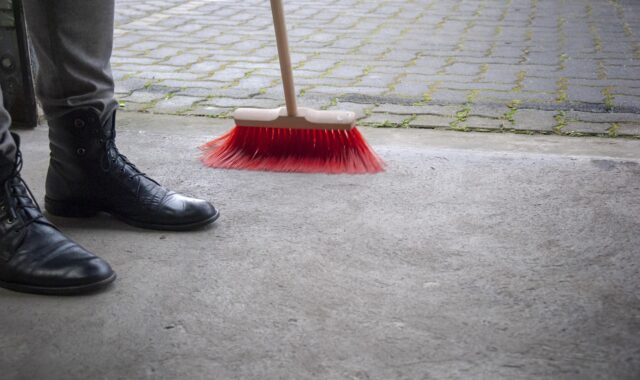
Use a soft broom, microfiber dust mop, or vacuum set for hard floors. If the vacuum has a rotating beater bar, turn it off or use a hard-floor head. A beater bar that is useful on carpet can scatter debris or scuff resilient flooring, especially on textured vinyl planks with a matte finish.
Entry mats are also part of floor care, not just decoration. Place walk-off mats at exterior doors and high-traffic transitions to capture grit before it reaches the floor. Choose mats identified as safe for vinyl or resilient flooring. Rubber-backed mats and some dyed mats can discolor vinyl over time because rubber compounds may react with the surface or backing materials. This risk is noted in several manufacturer care guides, especially for resilient products.
A practical dry cleaning schedule
- Daily or as needed: sweep kitchens, entries, pet areas, and dining spaces where grit and crumbs collect quickly.
- Two to three times per week: dust mop main traffic lanes, especially on matte LVP where footprints and fine dust are more visible.
- Before every wet mop: remove dry debris first so the mop does not drag grit across the finish.
- After renovation or furniture assembly: vacuum carefully and change mop water often, because drywall dust and sawdust can create haze if spread with water.
Use a damp mop and the right cleaner
Most current vinyl floor care guidance from manufacturers and flooring retailers points to a pH-neutral, non-abrasive cleaner formulated for resilient or vinyl flooring. The cleaner should lift soil without attacking the wear layer, leaving waxy buildup, or requiring aggressive rinsing. A microfiber mop is usually better than a string mop because it uses less water and picks up fine residue more evenly.
Water control matters. Vinyl itself is water resistant, and many LVP products are described as waterproof, but standing water is still a risk. Liquid can reach seams, wall edges, stair noses, transitions, or subfloor materials. On glue-down floors, excessive moisture may also affect adhesive performance if water sits for too long. Aim for a damp mop, not a flooded floor.
How to mop without leaving streaks
- Sweep or vacuum first.
- Dilute the cleaner exactly as the label says. More concentrate is not better and often leaves a film.
- Use a clean microfiber pad or mop head.
- Mop in manageable sections, following the plank direction on textured floors.
- Replace dirty water before it turns gray or cloudy.
- If the floor feels tacky, rinse once with a clean damp mop and dry with a microfiber cloth.
Streaking usually comes from one of four issues: too much cleaner, dirty rinse water, residue from old products, or mopping over dry debris. On dark or matte vinyl, residue may show as footprints, cloudy patches, or uneven shine under sunlight. Reducing the cleaner concentration and using a fresh microfiber pad often solves the problem faster than switching to a stronger chemical.
What to avoid on vinyl floors
Vinyl floors are often described as low maintenance, but low maintenance does not mean chemical-proof. Problem products usually fall into two groups: harsh cleaners that may dull or stress the finish, and coating products that build an artificial layer over the factory surface.
| Product or method | Why it can be a problem | Safer approach |
|---|---|---|
| Abrasive powders or scouring pads | They can scratch or haze the wear layer. | Use microfiber and a vinyl-safe cleaner. |
| Wax, oil soap, or mop-and-shine products | They can leave buildup, uneven gloss, or a sticky film. | Use a cleaner made for no-wax vinyl or resilient floors. |
| Strong alkaline degreasers or solvents | They may affect coatings, adhesives, or printed layers if misused. | Spot test and follow the flooring manufacturer’s guide. |
| Bleach or ammonia as a routine cleaner | These may conflict with many vinyl care guides and can create safety risks if mixed with other cleaners. | Reserve disinfectants for appropriate situations and follow labels carefully. |
| Steam mops | Heat and moisture can be restricted by some warranties, especially at seams and edges. | Use only if the specific floor manufacturer allows it. |
Vinegar deserves a separate note because it appears often in household cleaning advice. Some older cleaning routines use diluted vinegar, and some homeowners find it removes light residue. However, several modern LVT and LVP care guides advise against vinegar-based products because acidic cleaners may dull or affect the surface over time. If the floor is under warranty, manufacturer guidance should come first.
Handle spills, stains, and sticky residue quickly
Vinyl is forgiving when spills are cleaned promptly. The longer a spill sits, the more likely it is to leave a stain, attract soil, or settle into surface texture. Blot wet spills with a clean white cloth or paper towel. Avoid dyed rags that might transfer color, especially on lighter floors.
For food, mud, drink spills, and everyday grime, start with warm water and a pH-neutral vinyl cleaner. Work from the outside of the spill toward the center so the residue does not spread. For textured planks, a soft nylon brush may help lift soil from embossing, but avoid stiff brushes and abrasive pads.
Common problem areas
- Greasy kitchen film: Use a properly diluted neutral cleaner and change mop water frequently. If the film remains, repeat with fresh solution instead of sharply increasing the concentration.
- Adhesive or construction residue: Check the installation guide before using removers. Solvent-based products can damage some finishes or affect seams.
- Black rubber marks: Try a manufacturer-approved spot cleaner or gentle rubbing with a damp microfiber cloth. Prevent recurrence by replacing rubber feet or mats.
- Pet accidents: Clean promptly, then dry the area. Avoid enzyme or disinfecting products unless the label and floor manufacturer both allow use on vinyl.
- Cloudy buildup: The cause is often repeated use of polish, soap, or too much cleaner. A rinse with clean water may help, but heavy buildup may require a vinyl-safe residue remover recommended by the flooring brand.
Always test a stain method in an inconspicuous area first. A product that works on one brand of LVP may not be appropriate for another, especially where surface textures, antimicrobial coatings, or low-gloss finishes differ.
Protect the floor from furniture, sunlight, and traffic
Long-term vinyl floor care is partly about preventing damage that cleaning cannot fix. Furniture legs, rolling chairs, direct sunlight, and heavy appliances can create dents, scratches, fading, or uneven wear. These issues tend to develop gradually, so prevention is easier than repair.
Use felt pads or wide, non-staining floor protectors under furniture. The heavier the object, the wider the load-bearing protector should be. Narrow metal glides and small plastic feet concentrate pressure and can leave indentations. For rolling office chairs, use a chair mat labeled safe for vinyl or choose soft casters that the flooring manufacturer permits. See also: built-in furniture.
When moving furniture, lift rather than drag. For appliances, use hardboard panels or approved moving aids to spread the load. Dragging a refrigerator or sofa across vinyl can cut or stretch the surface, especially at plank edges.
Sunlight is another overlooked factor. Prolonged direct sun can contribute to fading, thermal movement, or color changes depending on the product and installation. Window coverings, UV-filtering films, and area rugs that are safe for vinyl can help reduce uneven exposure. Again, avoid rubber-backed rugs unless the flooring manufacturer specifically approves them.
Cleaning versus disinfecting
Cleaning and disinfecting are not the same. Public health guidance from agencies such as the CDC and EPA generally treats cleaning as the removal of dirt and many germs with soap or detergent, while disinfecting uses registered chemical products to kill remaining germs on suitable surfaces. For routine homes, cleaning is usually the first step and often the only step needed unless someone is ill, a high-touch contamination event has occurred, or a facility policy requires disinfection.
For vinyl floors, the additional question is surface compatibility. A disinfectant may be effective on a hard, nonporous surface but still unsuitable for a specific flooring finish if the label or floor warranty restricts it. If disinfection is needed, clean visible soil first, use a product labeled for the purpose, follow contact time and ventilation directions, and never mix bleach with ammonia or other cleaners.
Do not turn disinfection into a daily aggressive mopping routine unless there is a defined need. Overuse of harsh chemicals can make the floor harder to maintain by dulling the finish or leaving residues that attract more soil.
A simple maintenance plan for vinyl floors
The most reliable plan is consistent and modest. Heavy cleaning once a month cannot undo daily grit damage, and strong cleaners are not a substitute for frequent dry soil removal. Use the schedule below as a starting point and adjust it for pets, children, weather, commercial foot traffic, and the floor manufacturer’s instructions.
| Frequency | Care task | Purpose |
|---|---|---|
| Daily or high-traffic days | Dust mop, sweep, or vacuum without a beater bar. | Remove grit before it scratches or dulls the surface. |
| As spills happen | Blot, clean with a damp cloth, and dry. | Prevent staining, stickiness, and soil attraction. |
| Weekly or as needed | Damp mop with a pH-neutral vinyl-safe cleaner. | Remove body oils, food film, footprints, and fine residue. |
| Monthly | Inspect mats, furniture pads, chair areas, and sun-exposed zones. | Catch discoloration, dents, and wear patterns early. |
| Seasonally | Deep clean with an approved resilient-floor cleaner if buildup appears. | Refresh appearance without applying unnecessary coatings. |
If the floor still looks dull after correct cleaning, resist the urge to apply polish immediately. Many modern vinyl products have a factory finish designed to be maintained, not waxed. Some older sheet vinyl products and specific brand systems may allow a compatible floor finish, but that should be confirmed in the product literature. Applying the wrong polish can create a bigger maintenance problem than the dullness it was meant to solve.
Frequently asked questions
Can I use a steam mop on vinyl flooring?
Only if the specific flooring manufacturer allows it. Steam mop guidance is inconsistent across the market. Some sources allow limited use on certain vinyl floors, while many LVT and LVP care guides warn against steam because heat and forced moisture can affect seams, adhesives, or warranty coverage. If the floor is new or under warranty, follow the written care guide.
Why does my vinyl floor look cloudy after mopping?
Cloudiness usually comes from residue. Common causes include too much cleaner, soap-based products, polish buildup, dirty mop water, or mopping before dry soil is removed. Try a clean microfiber mop with properly diluted pH-neutral cleaner, then rinse with a lightly damp mop if needed.
Is vinegar safe for vinyl floor care?
Vinegar is widely discussed, but it is not universally recommended. Several modern vinyl care guides advise against vinegar-based products, especially for luxury vinyl surfaces. If the care guide for your floor does not approve vinegar, use a pH-neutral cleaner formulated for vinyl instead.
Do vinyl floors need wax?
Most modern no-wax vinyl, LVT, and LVP floors do not need traditional wax. Wax and mop-and-shine products can leave uneven buildup. Some specific flooring systems may allow a compatible finish for restoration, but that is a product-specific instruction, not a general rule.
What is the safest everyday cleaner for vinyl plank floors?
For most vinyl plank floors, the safest everyday choice is a pH-neutral, non-abrasive cleaner labeled for vinyl or resilient flooring, used at the recommended dilution. Pair it with a microfiber mop and minimal water for better control and fewer streaks.