HDPE outdoor furniture material guide for patios, parks, and commercial spaces
Why HDPE is used for outdoor furniture
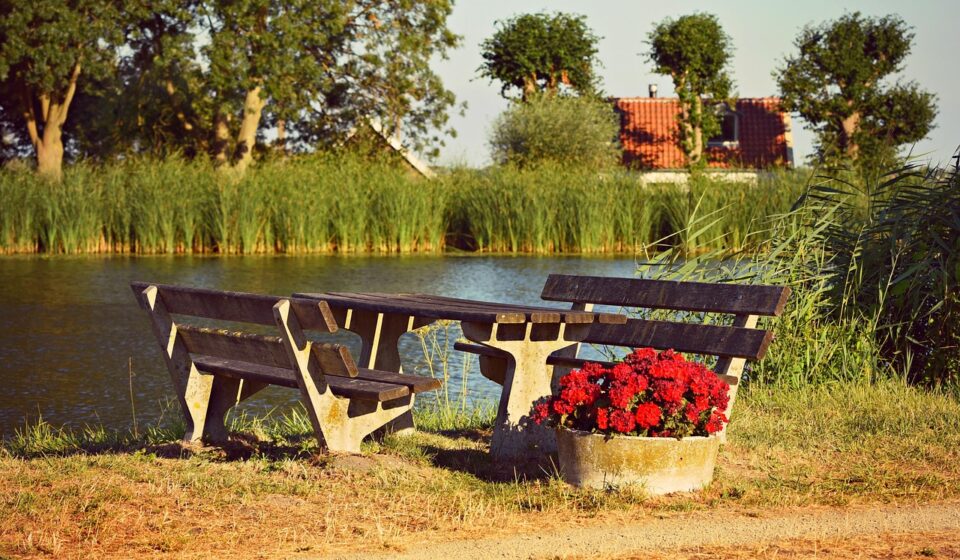
HDPE outdoor furniture is widely specified because it addresses several maintenance problems common with traditional patio materials. High-density polyethylene does not absorb water like wood, does not rust like steel, and usually does not require sanding, staining, or repainting. That makes it practical for patios, pool decks, coastal spaces, parks, campuses, and hospitality areas where furniture may remain outdoors for long periods.
HDPE still needs proper specification. Buyers should check UV stabilization, fastening design, recycled content claims, heat behavior, and whether the furniture is engineered for the intended load and climate. The material is a good fit when durability and reduced maintenance are more important than a natural wood feel or a very slim metal profile.
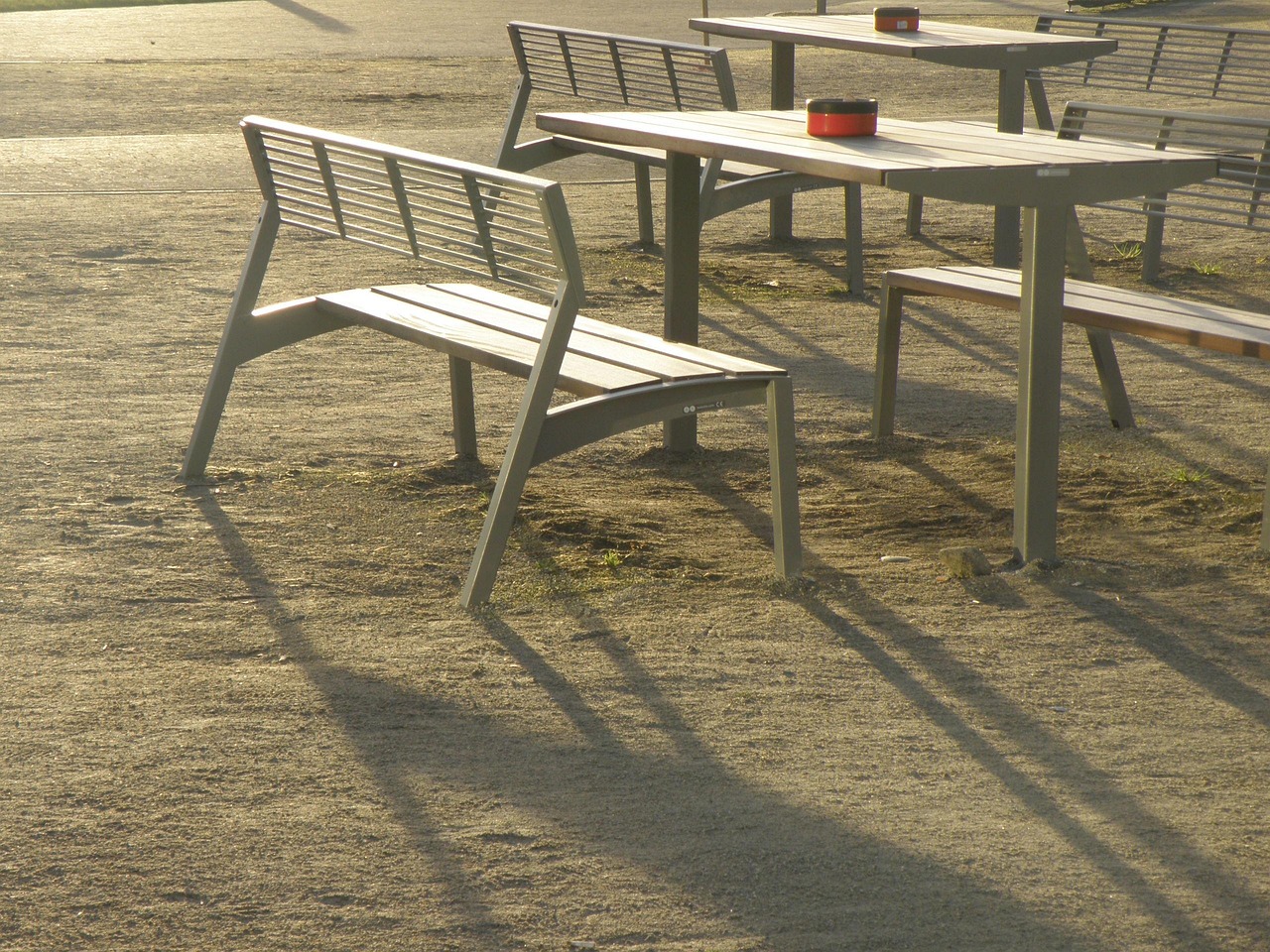
This article focuses on HDPE as a furniture material rather than a product review. For more articles on material selection, see the furniture materials section.
What HDPE is and what it is not
HDPE stands for high-density polyethylene, a thermoplastic polymer commonly identified by resin code 2. Public materials guidance from U.S. agencies describes HDPE as a stiff, strong plastic used in items such as bottles, containers, buckets, crates, and plastic lumber. In furniture, HDPE is often processed into sheet or lumber-like profiles, then cut and assembled into chairs, benches, tables, loungers, and outdoor dining sets.
The term is sometimes used loosely in marketing, so it helps to separate several related materials. Solid HDPE poly lumber is mainly plastic. Wood-plastic composite, often called WPC, blends plastic with wood flour or fibers. PVC lumber is based on polyvinyl chloride rather than polyethylene. HIPS and PP are other plastics that may appear in lower-cost outdoor products. These materials can all be useful, but they do not behave the same way in sun, heat, water, or under long-term load.
Recycled HDPE is common, but claims need evidence
Many HDPE furniture lines use recycled resin, including post-consumer and post-industrial streams. That can support a stronger sustainability story, but a recycled-content claim should not be accepted without evidence. The U.S. Federal Trade Commission’s Green Guides advise marketers to avoid vague or misleading environmental claims and to substantiate recycled-content statements. This matters because recycled content may refer to the whole product, only part of the product, or a specific resin layer.
EPA’s latest national municipal solid waste plastics data are based on 2018 figures. In that dataset, overall plastics recycling was 8.7 percent, while natural HDPE bottles had a higher recycling rate of 29.3 percent. Those numbers provide useful context, but they do not prove the recycled content of any specific chair or bench. A credible specification should identify the claimed recycled percentage, whether it is post-consumer or post-industrial, and whether fasteners, colorants, additives, and non-HDPE components are included or excluded.
Performance benefits in outdoor settings
The main advantage of HDPE is that it reduces the maintenance burden associated with many outdoor furniture materials. It is especially attractive in wet or humid locations because the plastic itself does not rot, swell with absorbed water, or attract insects in the way untreated wood can. For commercial sites, that can mean fewer seasonal maintenance tasks and less downtime for repainting or refinishing.
- Moisture resistance: HDPE is suitable for rainy patios, poolside areas, and many coastal settings because the material is not water-absorbent in the way wood is.
- Low surface maintenance: Most pieces can be cleaned with mild soap, water, and a soft brush rather than sanding or coating.
- Color-through construction: Many HDPE lumber profiles are pigmented through the material, so scratches often expose the same general color rather than a separate coating layer.
- Corrosion avoidance: The plastic parts do not rust, although screws, bolts, brackets, and hinges still need corrosion-resistant metal selection.
- Mass and stability: HDPE furniture is often heavier than lightweight aluminum or resin shell furniture, which can help in windy public or hospitality spaces.
These advantages explain why HDPE is often used for Adirondack chairs, public benches, dining sets, and outdoor lounge furniture. The material is most compelling where furniture stays outdoors year-round and owners want predictable cleaning rather than recurring refinishing.
Limitations specifiers should check before buying
HDPE furniture can perform very well, but its limitations affect design, placement, and long-term appearance. Plastic lumber standards and public technical documents often point to issues such as thermal expansion, creep, stiffness, and weathering. These are not automatic reasons to avoid HDPE; they are reasons to specify it carefully.
| Issue | Why it matters | What to check |
|---|---|---|
| Thermal expansion | HDPE expands and contracts with temperature changes more than many wood products. | Look for slotted holes, appropriate gaps, and assembly details that allow movement. |
| Creep under load | Plastics can slowly deform under sustained stress, especially in heat. | Check span lengths, seat supports, reinforcement, and weight ratings. |
| UV exposure | Sunlight can affect polymers over time if stabilization and pigments are inadequate. | Ask whether the material includes UV stabilizers and whether color performance has been tested. |
| Heat and fire proximity | HDPE is not appropriate directly beside grills, fire pits, or high-heat equipment. | Maintain safe clearances and avoid placing hot objects directly on the surface. |
| Surface wear | Edges, scratches, and abrasion may become visible in high-traffic sites. | Review texture, edge finishing, replaceable parts, and cleaning instructions. |
Thermal movement is one of the most overlooked details. A chair may tolerate movement because its parts are short, while a long bench, table, or rail-like member may need more allowance. Creep is also relevant for seats, arms, tabletops, and bench slats that carry load over time. A heavier-looking profile is not automatically stronger; section shape, reinforcement, fasteners, and support spacing all matter.
HDPE compared with other outdoor furniture materials
Choosing HDPE is easier when it is compared with realistic alternatives. No single material suits every project. The right choice depends on climate, maintenance capacity, appearance goals, weight requirements, budget, and the expected life of the installation.
| Material | Strengths | Trade-offs | Typical fit |
|---|---|---|---|
| HDPE poly lumber | Moisture resistant, low maintenance, no repainting in typical use | Thermal expansion, creep, plastic appearance, heat sensitivity | Patios, parks, pool decks, coastal seating, casual hospitality areas |
| Natural wood | Warm appearance, repairable, familiar feel | Needs coating or treatment; can rot, crack, or stain if neglected | Design-led spaces, covered patios, projects prioritizing natural texture |
| Powder-coated aluminum | Lightweight, corrosion resistant, slim profiles | Coating damage can show; may move in wind; can feel hot or cold | Restaurants, balconies, movable seating, modern outdoor settings |
| Steel or wrought iron | High weight, strong frame potential, classic styles | Rust risk if coating fails; heavy to move | Formal gardens, streetscapes, anchored commercial furniture |
| Wood-plastic composite | Can offer wood-like texture with plastic content | Wood fibers may affect moisture and biological durability if poorly protected | Deck-related furniture, coordinated outdoor surfaces, semi-wood appearance |
| PVC or general resin furniture | Lightweight options and varied price points | Quality varies widely; may lack stiffness or long-term UV performance | Temporary, seasonal, or budget-sensitive applications |
The useful comparison is not only HDPE versus wood. It is HDPE versus the maintenance schedule the owner can realistically support. A wood bench can be a better aesthetic choice if a site has staff and budget for refinishing. HDPE becomes more attractive when furniture will be exposed, heavily used, and expected to look acceptable with routine cleaning only.
How to evaluate quality without relying on marketing
Marketing language around outdoor furniture often emphasizes recycled plastic, weather resistance, and low maintenance. Those claims can be directionally true, but a better evaluation looks at test methods, construction details, and disclosure. ASTM D6109 is a standard test method for flexural properties of unreinforced and reinforced plastic lumber and related products. ASTM D6662 covers polyolefin-based plastic lumber decking boards, so it is not a furniture standard by itself, but it shows the type of performance framework used for plastic lumber products.
For furniture buyers, the practical questions are direct. Are the structural members thick enough for the span? Are seat slats supported so they do not sag? Are fasteners stainless steel or otherwise suited for the environment? Does the design allow thermal movement? Are edges rounded enough for comfort? Does the manufacturer provide care instructions, replacement hardware guidance, and clear limitations around heat exposure?
UV stability deserves particular attention. Polymer weathering research consistently shows that sunlight can affect plastics, while additives, pigments, and stabilizers can improve outdoor performance. A vague phrase such as “weatherproof” is less useful than a clear statement about UV-stabilized resin, colorant system, and any accelerated or outdoor exposure testing used by the supplier. For dark colors, also consider surface temperature in direct sun. Black or dark brown furniture may fit a design scheme but can become uncomfortable in hot climates. See also: built-in furniture.
Where HDPE outdoor furniture makes the most sense
HDPE is a strong candidate for spaces where water, cleaning frequency, and long exposure are the main concerns. Around pools, it avoids the rot risk of neglected wood and the corrosion concerns of poorly specified metal hardware. In coastal or lakeside spaces, it can tolerate moisture and salt air better than many painted materials, provided the hardware is also chosen correctly. In parks, campuses, and multifamily properties, the weight and durability of HDPE can make it suitable for benches, picnic tables, and communal seating.
Hospitality spaces may use HDPE where casual comfort and low maintenance are more important than a luxury natural finish. Restaurants and resorts should still test sample pieces for comfort, stackability, ease of movement, and heat in direct sun. Residential buyers may appreciate HDPE for Adirondack chairs, dining sets, and outdoor benches because it can remain outside through changing seasons with limited upkeep.
HDPE is less ideal where a project needs very thin profiles, high heat resistance, a premium natural grain, or structural spans without reinforcement. It may also be the wrong choice if local end-of-life options are limited and the furniture cannot be repaired or separated into recyclable components. In these cases, aluminum, stainless steel, sustainably sourced wood, or modular repairable designs may be more appropriate.
Maintenance and end-of-life considerations
Routine care is one of HDPE’s advantages. A typical cleaning plan uses mild soap, water, and a soft brush or cloth. Pressure washing may be possible for some products, but aggressive pressure, abrasive pads, or harsh solvents can damage surfaces or change the appearance. Sunscreen, food oils, tree sap, and mildew from surface dirt should be cleaned promptly, especially on lighter colors.
Maintenance should also include periodic hardware checks. Even if the HDPE members remain stable, loose screws, worn glides, and corroded brackets can reduce safety and comfort. Commercial sites should schedule inspections before peak outdoor seasons and after severe weather. If parts are replaceable, keeping spare fasteners and slats can extend service life and reduce full-product disposal.
End-of-life planning is more complex than the recycling symbol suggests. HDPE resin code 2 indicates the polymer family, not a guarantee that a local recycler accepts a large, pigmented, hardware-filled furniture item. Recycling options depend on local processing capacity, contamination, color, additives, and whether metal components can be removed. A responsible purchasing process should ask whether the supplier offers take-back, whether parts can be separated, and whether repair is available before replacement is considered.
Specification checklist for HDPE furniture
- Confirm whether the product is solid HDPE, foamed HDPE, reinforced plastic lumber, WPC, or another resin.
- Ask for recycled content details, including post-consumer versus post-industrial content where available.
- Check UV stabilization, pigment system, and any weathering or color-retention testing.
- Review weight ratings, support spacing, and whether testing is relevant to the actual furniture form.
- Specify corrosion-resistant hardware for coastal, poolside, or high-humidity sites.
- Confirm that the design allows for thermal expansion and contraction.
- Consider surface temperature in full sun, especially for dark colors.
- Ask for cleaning instructions, replacement part availability, and end-of-life options.
This checklist is especially useful for public and commercial projects, where a low-maintenance material still needs documentation. The goal is not to overcomplicate a furniture purchase, but to separate durable HDPE construction from vague plastic furniture claims.
Frequently asked questions
Is HDPE outdoor furniture waterproof?
HDPE itself is highly moisture resistant and does not absorb water like wood. However, the complete furniture item should still be evaluated as a system. Hardware, joints, inserts, cushions, and surface dirt can affect performance, so waterproof material does not eliminate cleaning and inspection.
Does HDPE furniture fade in the sun?
Quality HDPE outdoor furniture is usually made with pigments and UV stabilizers to slow color change, but no outdoor material is completely immune to sunlight. Fade resistance depends on formulation, color, exposure level, climate, and cleaning practices.
Is recycled HDPE furniture always more sustainable?
Recycled content can reduce demand for virgin resin and create value for recovered plastic, but sustainability depends on more than one claim. Service life, repairability, transport, local recycling options, and truthful recycled-content disclosure all matter.
Can HDPE furniture be left outside all year?
In many climates, HDPE furniture can remain outdoors year-round. Owners should still follow the supplier’s care guidance, inspect fasteners, avoid high-heat exposure, and consider covering or storing pieces during extreme weather if recommended.
Is HDPE better than wood for patio furniture?
HDPE is often better for low-maintenance, wet, or high-use spaces. Wood may be better when natural appearance, refinishing flexibility, and traditional feel are priorities. The better choice depends on the site’s climate, design goals, and maintenance capacity.