Recycled plastic patio furniture material guide for buyers and specifiers
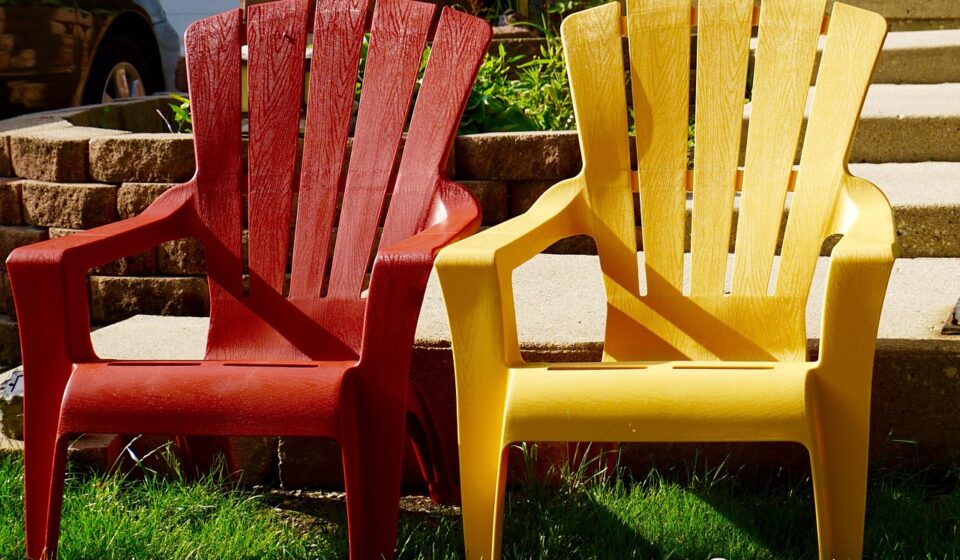
What recycled plastic patio furniture means
Recycled plastic patio furniture is outdoor furniture made partly or entirely from plastic recovered before disposal, often formed into boards sometimes called poly lumber. For buyers and specifiers, the useful question is not only whether the furniture contains recycled material. It is whether the product identifies the plastic type, states the recycled content clearly, uses weather-resistant construction, and provides a realistic end-of-life path.
In practice, recycled high-density polyethylene, often shortened to HDPE, is one of the most common materials used for sturdy outdoor chairs, benches, tables and Adirondack-style seating. It can be a practical alternative to wood, metal or low-cost resin furniture, especially where moisture, salt air and routine maintenance are major concerns.

The interest in recycled plastic furniture also reflects a broader materials issue. The U.S. Environmental Protection Agency’s Advancing Sustainable Materials Management data for 2018 reported an 8.7 percent recycling rate for plastics in municipal solid waste, while also noting that plastics appear in durable goods such as furniture. Turning recovered plastic into longer-life outdoor products can be valuable, but it should be evaluated as a material strategy rather than treated as automatic proof of sustainability. For more material-focused articles, see the furniture materials section.
Why recycled content claims need careful reading
Recycled plastic patio furniture sits at the intersection of product performance and environmental marketing. That makes the claim language important. Under the Federal Trade Commission Green Guides at 16 CFR Part 260, recycled content claims should not misrepresent whether a product or package is made from recycled material. If an item is only partly made from recycled material, the claim should be qualified so buyers understand the amount or percentage involved.
This matters because outdoor furniture is rarely one simple material. A chair may include plastic lumber, stainless steel or coated steel hardware, aluminum frames, fasteners, cushions, fabric slings, glides and packaging. A broad phrase such as sustainable patio chair is less useful than a specific statement such as recycled HDPE lumber with a defined percentage of post-consumer content. The second statement can be checked; the first is mostly a positioning phrase unless it is backed by details.
- Ask whether the recycled percentage applies to the whole product, the plastic lumber only, or the packaging.
- Distinguish post-consumer content from pre-consumer or post-industrial content when the supplier makes that distinction.
- Look for the recycled content percentage by weight, not only by surface area or selected components.
- Ask whether colorants, UV stabilizers and additives are included in the calculation.
- For commercial procurement, request documentation rather than relying only on catalog language.
Third-party validation can add confidence when claims affect purchasing decisions. UL Solutions offers environmental claim validation and recycled content certification programs, while the ANSI/BIFMA e3 furniture sustainability standard addresses broader furniture sustainability criteria, including material inventory and recycled content classification. These tools do not make every certified product the right choice for every patio, but they help separate documented claims from vague green language.
Material options and performance trade-offs
The word plastic covers many polymers, and their outdoor performance is not identical. Recycled plastic patio furniture is commonly associated with HDPE because the material has good moisture resistance and can be processed into heavy boards that behave more like lumber than thin molded resin. Some products use mixed plastics, polypropylene, polyethylene blends, or wood-plastic composite. Each option has a different balance of stiffness, weight, surface feel, color stability, cost and recyclability.
| Material used in outdoor furniture | Typical advantage | Watch point |
|---|---|---|
| Recycled HDPE or poly lumber | Moisture resistance, substantial weight, low routine maintenance | Quality depends on resin consistency, UV package, board profile and hardware |
| Wood-plastic composite | Can offer a more wood-like appearance and board format | May include fibers or fillers that change water behavior and repair options |
| Injection-molded recycled plastic | Can be lightweight and cost efficient for simple forms | May feel less rigid and can be harder to repair if a molded part cracks |
| Resin wicker over a frame | Flexible look, lighter weight and varied styling | Performance depends heavily on weave quality, frame material and UV exposure |
Outdoor furniture performance is not only about the polymer. ASTM D7032-21, although written for wood-plastic composite and plastic lumber used in exterior deck boards, stair treads, guards and handrails, is useful as a reminder of the conditions these materials face. It references concerns such as flexural performance, ultraviolet resistance, freeze-thaw exposure, moisture effects, fastener holding and creep behavior. Patio furniture has its own design requirements, but the same outdoor stresses are relevant to chairs, benches and tables.
Buyers should therefore look beyond a smooth recycled surface. A well-designed recycled plastic chair should have adequate board thickness, stable joints, corrosion-resistant fasteners, rounded edges where users touch the product, drainage details where water could collect, and enough mass or anchoring for windy locations. Thin boards, undersized screws or poor support geometry can undermine the benefits of a good material.
How recycled plastic compares with wood, metal and resin wicker
Recycled plastic is not the universal winner for every outdoor setting. It is better understood as one strong candidate among several material families. Its main advantage is low routine maintenance in wet or exposed conditions. It does not need staining like many wood products, and it does not rust like bare or poorly coated steel. However, it can be heavier than aluminum, less traditional in appearance than hardwood, and more difficult to refinish if the surface is deeply scratched.
| Patio furniture material | Where it performs well | Main limitation |
|---|---|---|
| Recycled plastic or poly lumber | Wet climates, coastal patios, public seating, low-maintenance residential spaces | Heavy weight, heat expansion and quality variation among recycled feedstocks |
| Teak or durable hardwood | Premium residential patios and designs needing natural texture | Higher maintenance expectations and sourcing questions |
| Aluminum | Lightweight seating, movable dining sets and powder-coated modern designs | Can dent, feel light in wind and heat up in strong sun |
| Steel or iron | Heavy decorative pieces and stable commercial seating | Coating damage can lead to corrosion if not maintained |
| Resin wicker | Soft lounge styling and covered patios | Weave and frame quality determine service life |
The strongest case for recycled plastic patio furniture is not simply that it contains recycled material. It is that a durable product can extend the useful life of recovered plastic while reducing repainting, sealing and frequent replacement. The weakest case is a vague green claim with no percentage, no material disclosure and no repair or take-back information.
What to check before buying or specifying
For homeowners, the decision often comes down to comfort, weight, appearance and maintenance. Sit in the chair if possible, check arm height, look for smooth edges and confirm that the color works in direct sun. For specifiers, hospitality buyers, schools, parks and multifamily properties, the checklist should be more formal because the furniture will face heavier use and potential liability concerns. See also: built-in furniture.
For residential patios
- Confirm the furniture is intended for outdoor use, not only porch or covered use.
- Check whether the color is integral to the board or mainly a surface finish.
- Ask how to clean pollen, mildew, sunscreen, food stains and bird droppings.
- Look for replaceable hardware and parts, especially on folding or reclining pieces.
- Consider weight if the furniture must be moved frequently for storage or storms.
For commercial and public spaces
- Request material data sheets, recycled content documentation and cleaning instructions.
- Ask for load ratings or performance testing appropriate to the seating type.
- Specify corrosion-resistant hardware for coastal, poolside or high-humidity locations.
- Review fire, accessibility and local code needs for the intended installation.
- Evaluate warranty terms carefully, including exclusions for heat, vandalism, surface changes or improper cleaning chemicals.
Climate should influence the specification. Dark recycled plastic furniture can become hot in direct sun. Long boards can expand and contract with temperature changes, so joint design matters. In freezing climates, water should not be trapped in cavities where expansion can stress the product. In coastal areas, stainless steel or other corrosion-resistant hardware can be as important as the recycled plastic itself.
Maintenance, repair and end-of-life considerations
One reason recycled plastic patio furniture has gained attention is simple maintenance. Most pieces can be cleaned with mild soap, water and a soft brush. That does not mean every cleaning method is safe. Abrasive pads can dull surfaces, harsh solvents can damage some plastics, and high-pressure washing can roughen edges or force water into joints. Follow the product instructions when available.
Repairability is another practical issue. A solid poly lumber chair with mechanical fasteners may allow replacement of a board, screw or hinge. A one-piece molded chair may be cheaper initially but harder to repair when a structural part fails. For commercial buyers, replaceable components can reduce lifecycle cost even if the purchase price is higher.
End of life is often the least clear part of the recycled plastic story. A product made from recycled plastic is not automatically recyclable through local curbside programs. The furniture may be too large, may contain mixed materials, or may use additives that require a specialized processor. Before making circularity claims, ask whether the manufacturer, distributor or local recycler can actually accept the product at the end of service. The FTC Green Guides also distinguish recycled content from recyclable claims, so buyers should not assume that one proves the other.
Frequently asked questions
Is recycled plastic patio furniture the same as composite furniture?
Not always. Recycled plastic patio furniture may be made from mostly plastic lumber, often HDPE. Composite furniture can include plastic plus wood fiber, mineral fillers or other ingredients. The terms overlap in marketing, so the safest approach is to ask for the material composition and recycled content percentage.
Does recycled plastic patio furniture fade?
It can. UV exposure affects color over time, and performance depends on pigment quality, stabilizers, resin consistency and exposure level. Lighter colors may feel cooler in strong sun, while darker colors may show heat and surface marks differently. A supplier should be able to explain expected color change and cleaning limits.
Is recycled plastic furniture better than wood for patios?
It depends on the goal. Recycled plastic usually offers lower routine maintenance and strong moisture resistance. Wood offers natural grain, repairability and a traditional appearance, but many species need periodic care. For wet, coastal or public settings, recycled plastic can be practical. For design-led residential spaces, wood may still be preferred.
What is the most important buying question?
Ask what percentage of the actual product is recycled material and what polymer is used. If the answer is vague, the sustainability claim is weak. After that, check hardware, UV resistance, comfort, warranty limits and whether parts can be repaired or replaced.