Built in mirror wardrobes for modern bedrooms with practical design and safety checks
Why built in mirror wardrobes still work
Built in mirror wardrobes are useful when a bedroom needs efficient clothing storage, a full-length mirror and a lighter visual feel in the same wall run. They are not just a decorative upgrade. A mirrored wardrobe affects how daylight moves through the room, how large the space appears and how much storage can be hidden behind one continuous surface.
The best results come from measured cabinetry, suitable mirror panels, reliable tracks or hinges and interiors planned around real clothing habits. Compared with freestanding wardrobes, built-ins can use alcoves, awkward corners and floor-to-ceiling spans more efficiently. Compared with plain solid doors, mirror fronts reduce the visual weight of a large storage wall. For more context on space-saving cabinetry, visit the built-in furniture section.
The main risk is assuming that any mirrored door will work in any bedroom. A full wall of reflection can feel cold, dated or visually busy if the room already has glossy finishes, exposed clutter or strong light from several directions. It is better to treat mirror as a functional material and decide how much reflection the room actually needs.
Where mirror wardrobes make the most sense
Mirror-fronted built-ins are especially effective in compact bedrooms, guest rooms, rental apartments, dressing areas and narrow layouts where a separate standing mirror would take valuable wall space. In these rooms, the mirror has two practical roles: it provides a dressing surface and visually extends the depth of the room. When placed opposite a window or beside a light source, it can also carry brightness deeper into the space.
They are less successful when the wardrobe faces an unmade bed, open shelving, a television wall or a busy work area. Mirrors repeat whatever they face, so they can amplify visual noise as easily as they can reflect light. Before choosing full-height mirror doors, stand where the bed, desk and doorway will be and check what the mirror would reflect during normal use. A wardrobe that reflects daylight, a calm wall color or a curtain line will usually feel better than one that reflects laundry, cables or a crowded corner.
Room proportions also matter. Many installers plan full-depth hanging storage at roughly 600 mm, or about 24 inches, before door and track allowances. Sliding systems add track depth, while hinged doors need clear swing space in front. In a small room, a sliding mirror wardrobe may preserve walking clearance. In a larger primary bedroom, hinged mirrored sections can provide wider access and a more furniture-like appearance.
Door systems and mirrored layouts to compare
The door system has more influence on daily use than the mirror finish alone. It determines how much of the wardrobe can be opened at one time, how the door weight is carried and how much adjustment or maintenance the hardware will need.
| Option | Best use | Main advantage | Key limitation |
|---|---|---|---|
| Sliding mirror doors | Narrow bedrooms and wall-to-wall wardrobes | No door swing into the room | Only part of the wardrobe is accessible at one time |
| Hinged mirror doors | Rooms with enough front clearance | Wide access and simple hardware | Needs swing space and accurate alignment |
| Bifold mirror doors | Medium openings and retrofit closets | Better access than many sliders | More moving joints to adjust over time |
| Mixed mirror and solid fronts | Modern bedrooms and larger storage walls | Balances reflection with warmer surfaces | Requires careful panel proportioning |
Full mirror fronts
Full mirror fronts work well where the wardrobe is the main dressing zone. They can make a small wall feel more open, but the detailing should stay controlled. Thin frames, straight panel divisions and minimal handles usually age better than heavy decorative borders.
Partial mirror fronts
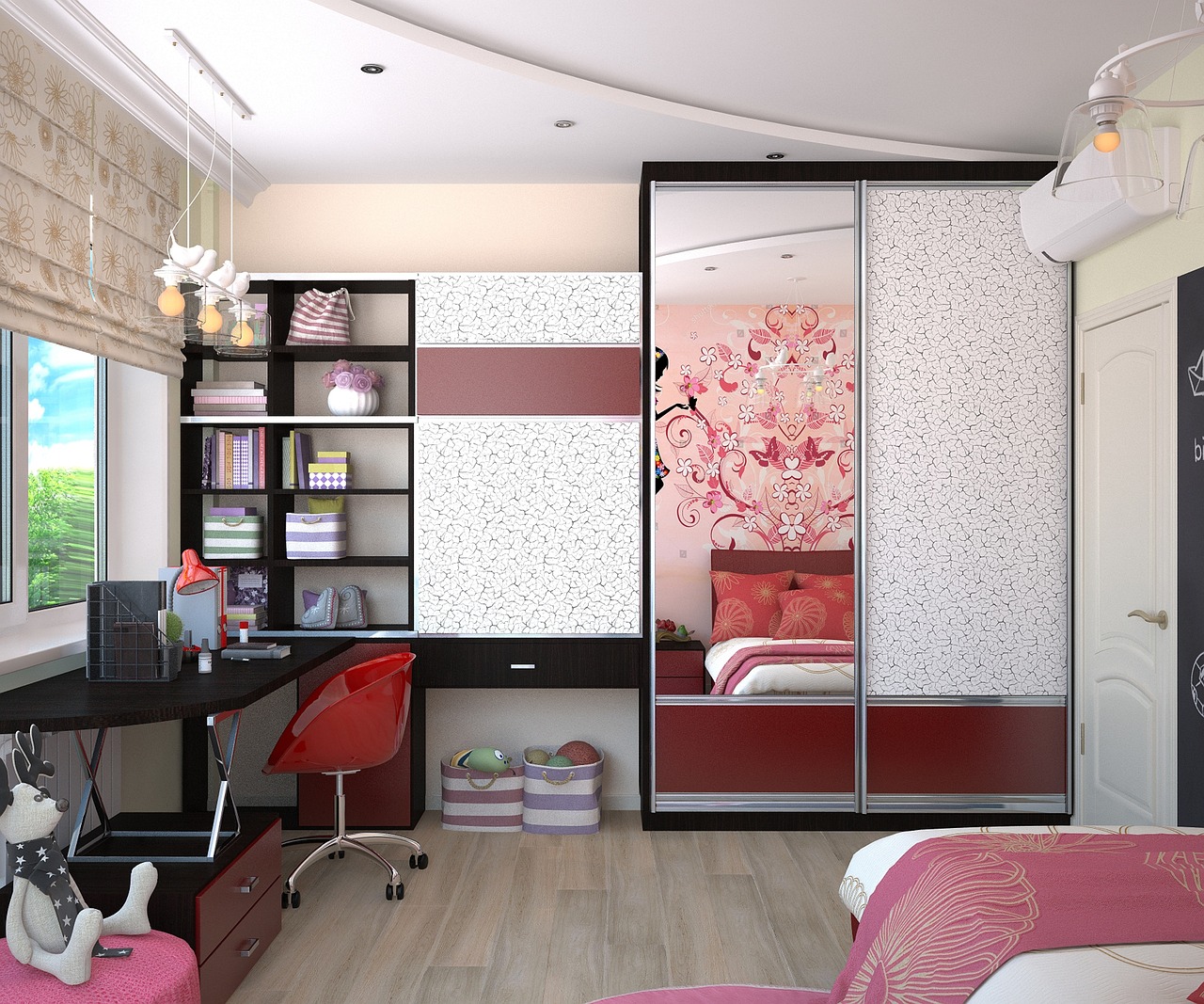
Partial mirror layouts are often more flexible. One mirrored panel can serve as the dressing mirror, while adjacent panels use wood veneer, laminate, painted finish, textile inserts or ribbed surfaces. This reduces glare and helps the wardrobe sit more naturally with the bed, flooring and wall color.
Framed versus frameless looks
Frameless mirror panels give a clean, continuous look, but the edges and backing need proper protection. Framed systems can be more forgiving in family bedrooms because the frame protects panel edges and gives users a clear place to hold or slide the door. The choice should reflect both the design style and the expected level of daily use.
Safety, panel materials and compliance checks
Mirror wardrobe doors are moving building elements, not ordinary wall mirrors. Before specifying or buying, confirm what type of mirror panel is being used, how it is backed, how it is held in the frame and which local safety requirements apply. Publicly available safety information from organizations such as the U.S. Consumer Product Safety Commission and ANSI shows that glazing safety is typically addressed through tested materials, impact performance and appropriate use conditions. ANSI Z97.1 is a safety glazing test standard, while building codes and product rules determine where safety glazing is required. The practical takeaway for a homeowner, designer or buyer is straightforward: do not assume that a decorative mirror sheet is suitable for a sliding or hinged wardrobe door.
Ask whether the panels are safety-backed, laminated, tempered or otherwise tested for the intended door system. Safety backing film is commonly used to help hold fragments together if a mirror breaks, but it should be part of a tested assembly, not a casual afterthought. Tempered glass behaves differently from ordinary annealed glass when broken, and laminated constructions provide another approach. The correct choice depends on the door design, the local code environment and the supplier’s tested system.
The cabinet body deserves the same attention. Built-in wardrobes often use MDF, particleboard, plywood or veneered panels. In the United States, the EPA TSCA Title VI program regulates formaldehyde emissions from certain composite wood products, and California has a related CARB program for composite wood products sold or supplied in the state. For a wardrobe project, specifiers should ask for compliant panels, clear labeling or supplier documentation rather than relying on vague low-emission claims.
Sustainability claims should also be checked carefully. Furniture and cabinetry markets include many environmental labels, but not all of them apply to residential built-ins in the same way. ANSI/BIFMA e3 is a recognized furniture sustainability standard, especially relevant in the commercial furniture sector. For residential wardrobe planning, it can be useful as a reference point for material transparency, low-emitting products and responsible sourcing, but the actual product documents should still be reviewed.
Planning the inside before choosing the outside
A mirror wardrobe can look impressive from the bedroom, but its real value is decided inside. The common planning mistake is treating the interior as a simple row of hanging rails. A more useful wardrobe divides storage by garment length, frequency of use and visibility.
- Short hanging: shirts, jackets, folded trousers and everyday garments usually need more space than long coats in many modern wardrobes.
- Long hanging: dresses, coats and formal wear need uninterrupted drop space and should not be crowded by drawers below.
- Drawers: underwear, accessories, gym wear and folded knitwear benefit from contained storage that reduces visual clutter.
- Adjustable shelves: shoes, bags and seasonal items change over time, so fixed shelf spacing should be used sparingly.
- High storage: luggage, bedding and rarely used items can sit above the main daily-access zone.
Good internal planning also considers who uses the wardrobe. A shared wardrobe should not automatically be divided in half if one person has more long garments and the other needs more drawers. Children’s rooms need adjustable rails and shelves that can change as clothing sizes change. Guest rooms usually need less specialized storage, but they benefit from a simple hanging section, a shelf for bags and clear space for spare bedding.
Lighting is another important detail. Integrated LED strips or sensor lights can make deep wardrobes easier to use, especially when mirror doors reflect ambient light but the cabinet interior remains dark. Lighting should be installed with appropriate drivers, ventilation and cable management, and it should not interfere with sliding tracks, hinges or drawer movement. See also: buying guides.
Design details that keep mirror wardrobes from looking dated
Mirrored wardrobes have moved through several design cycles. Older versions often used large uninterrupted silver panels with heavy tracks, a look many people associate with earlier apartment renovations. A more current approach uses mirror as one part of a balanced material palette.
Several details help the design feel more considered:
- Use narrower framed panels instead of one oversized reflective wall.
- Combine one or two mirror sections with matte wood, painted lacquer or textured laminate.
- Choose bronze, grey or lightly tinted mirror where a softer reflection suits the room.
- Align door divisions with drawer banks, bed edges or architectural lines in the room.
- Avoid overly ornate handles on large reflective surfaces.
- Leave enough plain wall, fabric or timber in the room to balance the mirror’s brightness.
The finish around the mirror is just as important as the glass. Warm wood frames can soften a reflective surface. Slim black or bronze metal frames can suit contemporary interiors. Painted frames can make the wardrobe blend into the wall while leaving only selected mirror panels visible. The aim is not to hide the mirror completely, but to stop it from dominating the bedroom.
Retrofit or new built-in installation
Older wardrobes with mirror doors are common in apartments and renovated houses. Some are worth updating; others are better replaced. Start by inspecting the track, frame, rollers, guides and panel condition. If the doors jump, scrape, wobble or no longer sit square, a new decorative finish will not solve the problem. Hardware failure on a heavy mirrored panel is both a safety issue and a usability issue.
A retrofit can be sensible when the existing wardrobe carcass is solid, square and deep enough for current storage needs. In that case, new doors, new tracks, soft-close hardware, internal drawers and better lighting may improve the wardrobe without rebuilding the entire unit. Replacement is more appropriate when the carcass is damaged by moisture, the interior layout is unusable, the opening is out of square, or the existing mirror panels lack credible safety documentation.
Applying film, paint or wallpaper over old mirror doors can change the appearance, but it should be approached cautiously. Added layers may affect door weight, roller movement or edge clearance. If safety backing is unknown or the mirror is cracked, covering the surface does not remove the underlying risk. A professional assessment is worthwhile before modifying large moving mirror panels.
A practical specification checklist
Before approving built in mirror wardrobes, use a checklist that covers function, safety and appearance rather than focusing only on the front finish.
- Measure bed clearance, walkway width, drawer pull-out space and door swing or sliding travel.
- Decide whether full mirror, partial mirror or mixed fronts best fit the room.
- Confirm the mirror panel construction, safety backing and tested door assembly.
- Ask for composite wood compliance information where MDF, particleboard or plywood is used.
- Check roller, hinge, guide and anti-jump details on sliding or folding systems.
- Plan the interior by garment type before finalizing door divisions.
- Coordinate lighting, switches and cable routes before the wardrobe is installed.
- Choose frame colors and adjacent materials that balance reflection with warmth.
- Confirm maintenance access for rollers, tracks, hinges and lighting components.
This checklist is also useful for comparing quotes. A cheaper wardrobe may omit soft-close hardware, use thinner cabinet panels, provide fewer internal fittings or give less clarity on mirror safety. A higher quote is not automatically better, but it should explain the difference in materials, hardware, installation method and documentation.
Frequently asked questions
Are built in mirror wardrobes a good idea for small bedrooms?
Yes, they can be a good solution when the room needs both storage and a full-length mirror. Sliding mirror doors are especially helpful where hinged doors would block circulation. The main design caution is reflection control: make sure the mirror reflects light or calm surfaces rather than clutter.
Do mirrored wardrobe doors need safety glass?
Mirror doors should be treated as moving panels that require appropriate safety consideration. The exact requirement depends on local code, product type and installation location. Ask suppliers for details on safety backing, laminated or tempered construction, tested assemblies and any applicable glazing standard.
Are sliding or hinged mirror wardrobes better?
Sliding doors save floor space and work well on long wardrobe runs. Hinged doors provide better access because more of the wardrobe can open at once, but they need clear swing space. The better choice depends on room clearance, wardrobe width and how often the interior needs to be fully accessed.
How can mirrored wardrobes look less dated?
Use mirror selectively rather than covering every door. Mixed fronts, slim frames, tinted mirror, warm wood details and simple hardware can make the wardrobe feel more architectural. Aligning panel divisions with the room’s proportions also helps the design feel intentional.
Can old mirrored wardrobe doors be modernized instead of replaced?
Sometimes. If the frame, rollers and panels are safe and in good condition, new tracks, internal fittings or partial decorative updates may be enough. If the doors are cracked, unstable, hard to slide or lack safety information, replacement is usually the more responsible option.