A practical mattress buying guide for comfort, support, and value

Buying a mattress is not about finding one universally perfect bed. It is about matching the mattress to the sleeper, the room, the bed frame, and the budget. A suitable mattress should help keep the spine reasonably aligned, reduce pressure at the shoulders and hips, fit the bedroom layout, and come with return and warranty terms that are clear before purchase.
Start by identifying the problem you need to solve. Common reasons include sagging, heat buildup, partner movement, back discomfort, weak edge support, or an older mattress that no longer feels supportive. The checks below can be used when comparing products online or testing mattresses in a showroom.
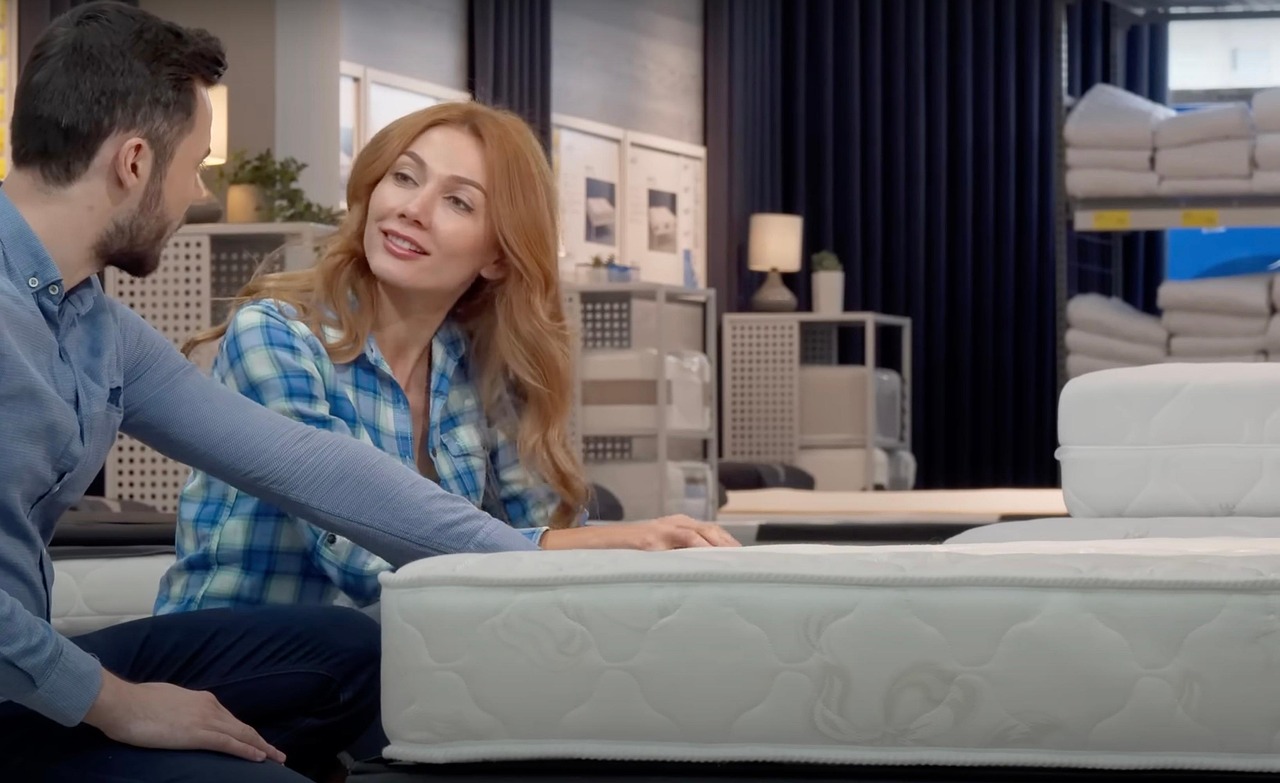
Start with the reason you are replacing the mattress
Age alone should not be the only reason to buy a new mattress. Industry sleep education sources often discuss a broad replacement window of about seven to ten years, but performance is the better test. A mattress may need replacing earlier if it has visible sagging, soft spots, broken coils, persistent body impressions, noisy springs, torn fabric, or a comfort level that no longer allows you to wake up rested.
Assess your current bed before shopping. If you sleep better in a hotel or guest bed than you do at home, that comparison is useful. If your lower back drops into the mattress, the support core may be worn. If your shoulders or hips feel sore in the morning, the comfort layers may be too firm or too thin. If you and a partner roll toward each other, the surface may have lost even support across the width.
Check the base as well. A good mattress can perform poorly on the wrong foundation. Slats that are too far apart, a bowed platform, an old box spring, or a frame without center support can all contribute to premature sagging. When comparing warranties, read the support requirements carefully because many brands exclude damage caused by an unsuitable foundation.
Match firmness to sleep position and body weight
Firmness is one of the most confusing parts of mattress buying because a “medium” mattress is not standardized across the industry. Many sellers use a 1-to-10 firmness scale, but the same model can feel softer to a heavier sleeper and firmer to a lighter sleeper. Treat firmness labels as a starting point, not a guarantee.
Side sleepers usually need more pressure relief
Side sleepers place more body weight on the shoulders and hips. A mattress that is too firm can create pressure points, while one that is too soft can let the waist sink too far. Many side sleepers begin with medium-soft to medium options, then adjust for body weight and shoulder width. A thicker comfort layer may help if the sleeper has pronounced curves or broad shoulders.
Back sleepers often need balanced support
Back sleepers generally need a surface that supports the lumbar area without pushing the hips upward. Medium to medium-firm models are often a practical starting range. A widely cited 2003 randomized trial published in The Lancet found that medium-firm mattresses performed better than firm mattresses for participants with chronic non-specific low-back pain. That result should not be treated as a prescription for every sleeper, however. People with persistent pain should seek medical advice rather than relying on mattress firmness alone.
Stomach sleepers usually need firmer support
Stomach sleeping can place strain on the lower back if the midsection sinks too deeply. For that reason, stomach sleepers often prefer firmer mattresses with less plushness on top. A soft pillow-top may feel comfortable for a few minutes in a showroom, but it can allow the pelvis to dip during a full night of sleep.
Combination sleepers need easy movement
If you change position often, consider responsiveness. Latex, hybrid, and some innerspring designs usually make repositioning easier than deep, slow-responding memory foam. If motion isolation is also important, a hybrid with pocketed coils and foam comfort layers may offer a useful compromise.
Compare mattress types by what they do well
Material choice affects pressure relief, motion transfer, airflow, edge support, price, and durability. The main categories often overlap because many modern mattresses combine several materials, so focus on construction rather than marketing names.
| Mattress type | Typical strengths | Possible trade-offs | Who may consider it |
|---|---|---|---|
| Innerspring | Responsive feel, strong airflow, familiar bounce | May offer less contouring and motion isolation unless paired with quality comfort layers | People who like a traditional, lifted feel |
| Memory foam | Pressure relief, motion isolation, close contouring | Can retain heat or feel slow to move on, depending on design | Side sleepers and couples who want less motion transfer |
| Latex | Responsive support, buoyant pressure relief, often good durability | Usually higher cost and a springier feel that not everyone prefers | Sleepers who want contouring without a deep sink |
| Hybrid | Combines coils with foam or latex comfort layers, often good edge support | Quality varies widely by coil system and comfort-layer thickness | Couples, combination sleepers, and people wanting balance |
| Adjustable airbed | Firmness can be changed, sometimes separately by side | Higher price and more mechanical components | Partners with different firmness preferences |
For foam mattresses, ask what kind of foam is used in the comfort and support layers. For latex, ask whether it is natural, synthetic, or blended, and whether the feel is more buoyant or more conforming. For hybrids, look closely at the comfort-layer thickness above the coils. A hybrid with very thin cushioning may feel closer to an innerspring, while a thick foam-topped hybrid may feel closer to a foam mattress.
Choose the right size for the room and the sleeper
Mattress size affects both sleep comfort and bedroom circulation. A larger bed may improve comfort for couples, children, or pets, but it can also crowd the room, block drawers, or make nightstands difficult to use. Measure the mattress area, walking paths, doorways, stair turns, and elevator access before ordering.
| U.S. size | Common approximate dimensions | Planning notes |
|---|---|---|
| Twin | 38 by 75 inches | Useful for children, daybeds, and compact rooms |
| Twin XL | 38 by 80 inches | Adds length for taller single sleepers |
| Full | 54 by 75 inches | Roomier for one adult but tight for most couples |
| Queen | 60 by 80 inches | A common choice for couples and primary bedrooms |
| King | 76 by 80 inches | More width for couples, but needs a wider room |
| California king | 72 by 84 inches | More length for taller sleepers, slightly narrower than king |
Dimensions can vary slightly by manufacturer, especially with compressed mattresses that need time to expand. If you already own a bed frame, platform, headboard, or built-in furniture, confirm the exact internal dimensions before choosing a size. In a furnished bedroom, leave enough clearance for wardrobe doors, bedside storage, window treatments, and walking space around the bed.
Read safety, label, and certification details carefully
In the United States, mattresses and mattress sets are subject to federal flammability requirements enforced through the Consumer Product Safety Commission. This does not mean every mattress uses the same flame barrier or chemical treatment. If material transparency matters to you, ask the seller to identify the fire barrier and cover materials in plain language.
Labels also matter. Textile labeling rules from the Federal Trade Commission can apply to fabric components, while bedding law labels in many states are designed to disclose filling materials and whether contents are new or reused. Do not remove the law label immediately after purchase because sellers and manufacturers may require it for warranty or return processing.
Certifications can be useful, but they need to be read accurately. CertiPUR-US, for example, applies to flexible polyurethane foam and addresses content, emissions, and durability criteria, including low VOC emissions below the program’s stated limit. It does not certify the entire mattress as organic, and it does not apply to springs, fabric, latex, adhesives, or every other component unless those components have separate certifications. For latex, wool, cotton, or finished-product claims, look for the specific standard named by the seller rather than assuming all “natural” language means the same thing.
Compare price, trial periods, returns, and warranties before checkout
A low advertised price is not always the lowest ownership cost. Delivery fees, old mattress removal, return shipping, required foundations, protectors, and restocking fees can change the real price. Online mattress brands often promote sleep trials, while stores may offer exchanges or comfort guarantees. In either channel, the written policy is what matters.
Check these items before you pay:
- How many nights the trial lasts and whether there is a minimum break-in period.
- Whether returns are free, exchanged only, or subject to pickup or restocking fees.
- Whether the mattress must be kept clean, undamaged, and used with a protector.
- Whether the original packaging is required for return.
- What indentation depth qualifies for warranty coverage.
- What foundation or frame is required to keep the warranty valid.
- Whether the warranty is full, prorated, or limited after a certain number of years.
Do not confuse a warranty with a comfort guarantee. A warranty usually covers defects in materials or workmanship, not the fact that a mattress feels too firm after two weeks. A trial policy is the document that matters for comfort risk.
Use a practical testing checklist
Whether shopping online or in a showroom, test the mattress against your actual sleep habits. In a store, lie down in your normal position for more than a few seconds. Bring your partner if you share the bed. Wear comfortable clothing, remove bulky coats, and pay attention to alignment rather than surface softness alone.
For online shopping, apply the same logic to specifications and policies. Read the full construction details, not only the marketing name. Look for layer thickness, foam type, coil design, cover material, height, weight, edge support notes, and whether the mattress is compatible with an adjustable base if you plan to use one.
A simple decision order can help prevent impulse buying:
- Confirm the size that fits the room and bed frame.
- Choose a firmness range based on sleep position and body weight.
- Select a material category that addresses your main issue, such as heat, motion, pressure, or edge support.
- Verify safety labels, material claims, and certifications.
- Compare delivery, return, and warranty terms in writing.
- Check the total cost, including foundation and removal needs.
The best mattress for value is the one that continues to feel supportive after the trial period, fits your furniture plan, and has policies you understand before a problem occurs. For more furniture planning ideas, visit Huangjinhe.com.
Frequently asked questions
How much should I spend on a mattress?
There is no single correct budget. Spend enough to get the construction, support, and return policy you need, but do not assume the highest price is automatically the right choice. Compare material quality, warranty terms, and whether the mattress solves your specific sleep problem.
Is a firm mattress always better for back pain?
No. A very firm mattress can increase pressure for some sleepers, while a very soft mattress can allow poor alignment. Medium-firm options are often a reasonable starting point for back sleepers and some people with lower-back discomfort, but persistent pain should be discussed with a healthcare professional.
Should I buy a mattress online or in a store?
Both can work. Stores allow in-person testing, while online sellers may offer broader selection and sleep trials. The better choice depends on how clearly the seller explains construction, delivery, returns, and warranty coverage.
Do I need a new bed frame with a new mattress?
Not always, but you should confirm compatibility. Heavy foam, latex, and hybrid mattresses often need strong, even support. If your frame is bowed, unstable, or has widely spaced slats, replacing or upgrading the base may protect the new mattress from early sagging.
How long should I try a new mattress before deciding?
Many sleepers need several weeks to adjust to a new surface, especially when moving from an old sagging bed to a more supportive one. Follow the seller’s written trial rules, including any required break-in period, and use the mattress with the correct foundation from the first night.