Robot vacuum buying guide for homes with furniture, rugs, and pets
Quick answer
A useful robot vacuum buying guide starts with the home, not with the highest advertised suction number. For most households, the right model has reliable mapping, enough clearance for low furniture, a brush system that suits the floor type, usable no-go zones, and a dock that fits where it needs to live. In homes with pets, children, rugs, or many chair legs, obstacle avoidance and tangle control often matter more than peak power claims.
If your home is mostly hard flooring, a vacuum-and-mop model can reduce routine cleaning. It still requires pad washing, water refilling, and occasional manual deep cleaning. Treat a robot vacuum as a maintenance appliance, not a full replacement for an upright or canister vacuum.
For more home product advice, visit our buying guides.
Start with your rooms, furniture, and floor plan
The most common buying mistake is comparing feature lists before checking the space the robot must navigate every day. A model that looks powerful on paper can be frustrating if it cannot pass under a sofa, reach the toe-kick area in a kitchen, move around dining chair legs, or return to its dock without getting trapped by rugs and cables.
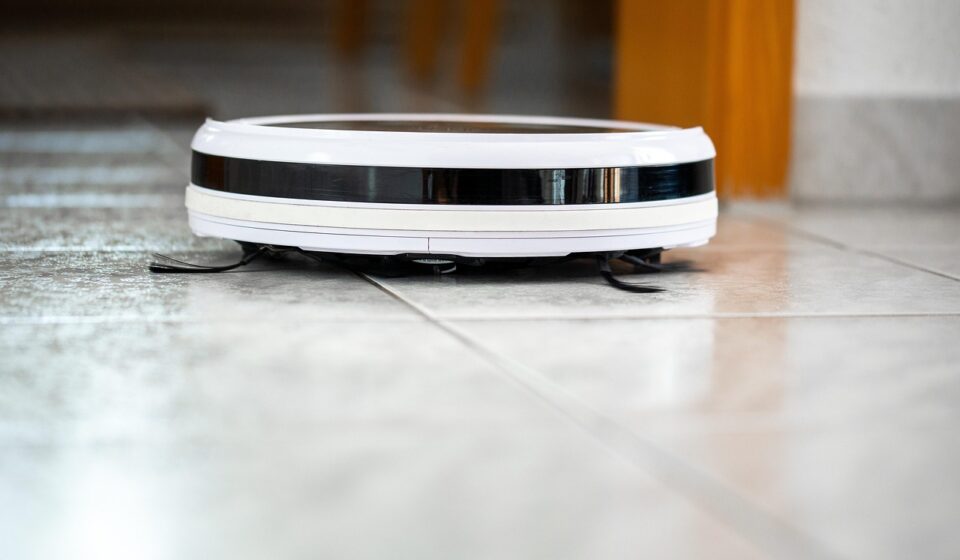
Before comparing models, measure three points: the height under low furniture, the width of narrow passages, and the height of thresholds between rooms. Many robot vacuums are low enough to travel under beds and cabinets, but models with raised LiDAR towers are usually taller than camera-only designs. That extra height can support accurate navigation, but it may also stop the robot from reaching dust under low furniture.
Furniture clearance matters more than it looks
In furniture-heavy homes, cleaning coverage depends on both shape and clearance. Round robots usually turn easily around chair legs, but they may leave more debris in square corners than D-shaped designs. D-shaped robots can reach edges better in some layouts, but they still need enough open space to turn. If your home has low sofas, platform beds, console tables, or built-in cabinets, confirm the robot body height instead of relying on product photos.
Check the dock dimensions as well. Self-emptying and mop-washing stations can be much larger than the robot itself. A dock placed in a narrow hallway, behind a door, or under a shelf may lead to failed returns, poor charging contact, or repeated map errors. Leave open space around the dock according to the manufacturer’s installation instructions.
Mixed flooring needs a balanced design
Hard floors, area rugs, medium-pile carpet, and carpet transitions all create different cleaning demands. On hard floors, brush design, edge cleaning, and dust pickup are often more important than maximum suction. On carpets, airflow, brush agitation, and the robot’s ability to keep moving without bogging down matter more. Public vacuum standards such as ASTM air-performance methods show that suction, airflow, and air power are separate measurements, while many robot vacuum listings use marketing numbers that are not directly comparable across brands.
If your home has thick rugs, tassels, or high transitions, look for adjustable suction, carpet detection, good wheel lift, and reliable mapping. If the home is mostly tile, vinyl, laminate, or sealed wood, a hybrid vacuum-and-mop design may deliver more everyday value than a vacuum-only model.
Navigation and obstacle avoidance should lead the shortlist
Navigation determines whether the robot cleans in an organized route or wanders inefficiently. Basic robots may rely on bump-and-turn behavior or simple sensors. Smarter models create maps, divide rooms, support no-go zones, and clean in predictable rows. For many buyers, especially in homes with furniture and rugs, navigation quality has a bigger effect on satisfaction than raw motor specifications.
LiDAR navigation is strong in low light and is often effective for fast, accurate mapping. Camera-based navigation can recognize visual cues and may support advanced object detection, but it depends more on lighting and raises additional privacy questions for some users. Some higher-end models combine LiDAR, cameras, structured light, or 3D sensors to improve object avoidance. The practical question is not which technology sounds most advanced; it is whether the robot can avoid common household problems such as cords, socks, toy pieces, pet bowls, rug edges, and chair bases.
No-go zones are essential in real homes
No-go zones and room-specific cleaning are practical features, not luxuries. They let you block pet feeding areas, delicate rugs, play zones, floor lamps, or rooms with loose cables. In an open-plan living area, choose a model that can divide a map into named zones and schedule each area separately. This helps prevent the robot from dragging kitchen crumbs into a living room rug or mopping where it should only vacuum.
Multi-floor homes need realistic expectations
A robot vacuum cannot climb stairs, so multi-floor support usually means it can store more than one map. You still need to carry the robot between floors and move or duplicate the dock depending on the model. For homes with two or three levels, a midrange robot on each main floor may be more practical than one expensive robot that has to be carried around constantly.
Choose mopping only if you will maintain it
Robot mopping has improved, but not all systems do the same job. Entry-level hybrid robots often drag a damp cloth behind the vacuum. This can help with light dust on hard floors, but it will not scrub dried spills. More advanced models use vibrating pads, rotating pads, roller mops, automatic mop lifting, pad washing, warm-air drying, and water refilling. These features can reduce manual work, but they also add cost, dock size, noise, and maintenance.
If your home is mostly carpet, mopping may not justify the extra cost unless the robot reliably lifts or removes the mop when it crosses rugs. If you have mostly hard floors, pets, or regular kitchen traffic, a mop-washing dock can be useful because dirty mop pads quickly become a weak point. The pad must be cleaned and dried; otherwise, it may spread odor or residue instead of improving the floor.
Check floor compatibility before using mop mode
Use caution with unsealed wood, delicate stone, waxed floors, or moisture-sensitive flooring. A robot mop uses much less water than a bucket mop, but repeated moisture in seams can still be a concern. Follow the flooring manufacturer’s care instructions and avoid adding cleaning liquids unless the robot maker specifically allows them. Many brands warn against unapproved detergents because they can clog pumps, damage seals, or leave residue.
Compare dock features and lifetime cost
The dock is now one of the biggest differences between robot vacuum models. A simple charging dock keeps the price and footprint low. A self-emptying dock reduces how often you handle dust, which is useful for pet hair and busy households. A full-service dock may empty debris, wash mop pads, dry them, refill clean water, and collect dirty water. Some premium systems can connect to plumbing, but that requires installation planning and is not necessary for most homes.
Self-emptying docks are convenient, but they are not silent. Test publications and user reports commonly note that dock emptying can be loud for a short period. If the dock sits near a bedroom, nursery, or home office, schedule cleaning and emptying for suitable times. See also: built-in furniture.
| Feature | Worth paying for if | Consider skipping if |
|---|---|---|
| Room mapping | You want scheduled cleaning by room or zone | You only need basic cleaning in one small open room |
| Obstacle avoidance | You have pets, children, cords, toys, or clutter | Your floors are consistently clear before cleaning |
| Self-emptying dock | You have pets, allergies, or little time for bin emptying | You dislike dock noise or have limited floor space |
| Auto mop washing | You have large hard-floor areas | Your home is mostly carpet or rugs |
| Replaceable roller and side brush | You want longer service life and easier maintenance | Replacement parts are hard to find or overpriced |
Look beyond the purchase price. Consumables may include dust bags, HEPA-style filters, side brushes, main rollers, mop pads, cleaning solution, and occasionally batteries. A cheaper robot can become expensive if parts are proprietary, frequently out of stock, or sold only in costly bundles. Before buying, check whether replacement parts are available from the manufacturer and how often the manual recommends replacing them.
Health, privacy, and safety checks before buying
A robot vacuum can help reduce visible dust and debris, but it is not an air purifier. The U.S. Environmental Protection Agency advises regular cleaning to reduce dust and allergens, and notes that high-efficiency filtration can help keep some vacuumed dust from escaping back into indoor air. For households with asthma, allergies, or pets, choose a sealed dust path where possible, use quality filters, and empty or replace bags carefully. Keep expectations realistic: a small robot vacuum cannot deep-clean carpet like a strong full-size machine.
Connected models also bring privacy and cybersecurity considerations. Many robot vacuums store home maps, connect to mobile apps, and may use cameras or microphones for navigation, obstacle recognition, or voice control. The Federal Trade Commission and NIST have both emphasized basic smart-device practices such as strong authentication, software updates, encryption, and clear data handling. The FCC approved a voluntary U.S. Cyber Trust Mark program for consumer IoT products in 2024, but shoppers should still review each product’s update policy, app permissions, data deletion controls, and camera settings.
Privacy questions to ask before checkout
- Does the robot use a camera, LiDAR, structured light, or a combination of sensors?
- Can it clean without cloud features after setup, or does it require a permanent account?
- Can you delete maps, images, voice recordings, or cleaning history?
- How long does the manufacturer provide security updates?
- Does the app support two-factor authentication?
- Can camera-based obstacle recognition be turned off?
Safety should also be part of the buying decision. Robot vacuums are battery-powered appliances that charge unattended. Look for recognized safety certifications on the product and charger, use only approved batteries and power adapters, and stop using any appliance with swelling, overheating, a burning smell, cracked housing, or charging faults. Product safety agencies have issued recalls for battery-powered floor-care products and other lithium-ion devices, so it is sensible to register the product and check recall notices if a model shows charging problems.
Match the robot to your household type
The best robot vacuum for one home may be the wrong purchase for another. Use the following scenarios to narrow your choice without getting distracted by every premium feature.
Furniture-dense apartments
Prioritize compact body height, precise mapping, good edge cleaning, and quiet operation. A large self-washing dock may take up too much space. If storage is tight, a self-emptying dock without mop washing may be the better compromise.
Homes with pets
Look for strong hair pickup, an anti-tangle main brush, self-emptying, washable or replaceable filters, and dependable obstacle avoidance. Pet bowls, toys, and occasional accidents make object detection more valuable. No robot should be trusted to handle pet waste; prevention and no-go zones are essential.
Families with children
Obstacle avoidance, scheduled room cleaning, and easy map editing are more important than maximum suction. Toys, socks, pencils, and craft materials can stop a robot or damage brushes. A model that lets you clean only the kitchen after meals may be more useful than one that insists on whole-home cycles.
Large open-plan homes
Choose long runtime, recharge-and-resume cleaning, large map capacity, and a dock that can handle bigger debris loads. If hard flooring dominates, consider an auto-washing mop dock. Confirm water tank size and whether the robot can complete the main floor without constant intervention.
Allergy-sensitive households
Prioritize filtration, sealed dust handling, self-emptying bags, and easy maintenance. A robot can support more frequent cleaning, but keep a full-size vacuum for carpets, upholstery, mattresses, and deep dust removal.
Frequently asked questions
Is a robot vacuum worth it for a small home?
Yes, if it saves routine effort and fits your layout. In a small apartment, mapping may still be useful because it prevents repeated bumping and lets you clean specific zones. However, a large self-washing dock may be unnecessary if floor space is limited.
Can a robot vacuum replace a regular vacuum?
Usually no. A robot vacuum is best for frequent maintenance cleaning. It can reduce dust, crumbs, and pet hair between deeper cleans, but most homes still need a stronger upright, stick, or canister vacuum for stairs, upholstery, deep carpet, baseboards, and tight corners.
Is LiDAR better than camera navigation?
LiDAR is often strong for fast mapping and low-light operation. Camera systems can help with object recognition, but they may raise privacy concerns and can depend on lighting. The best choice depends on your home: choose LiDAR for dependable mapping, and consider camera-assisted obstacle avoidance if clutter is a daily problem.
Should I buy a robot vacuum with a mop?
Buy a mop model if you have enough hard flooring to justify the maintenance. It can help with light soil, paw prints, and kitchen dust, especially when the dock washes and dries pads. Skip or limit mopping if your home is mostly carpet, has delicate flooring, or you do not want to manage water tanks and pads.
What should I check right before purchasing?
Measure furniture clearance, check dock size, confirm replacement part availability, review the privacy policy, verify app compatibility, and read the manual for maintenance intervals. A robot vacuum is a long-term household appliance, so the better purchase is the one that fits your floor plan and upkeep habits, not simply the one with the longest feature list.