Lawn maintenance checklist for mowing, watering, fertilizing, and aeration
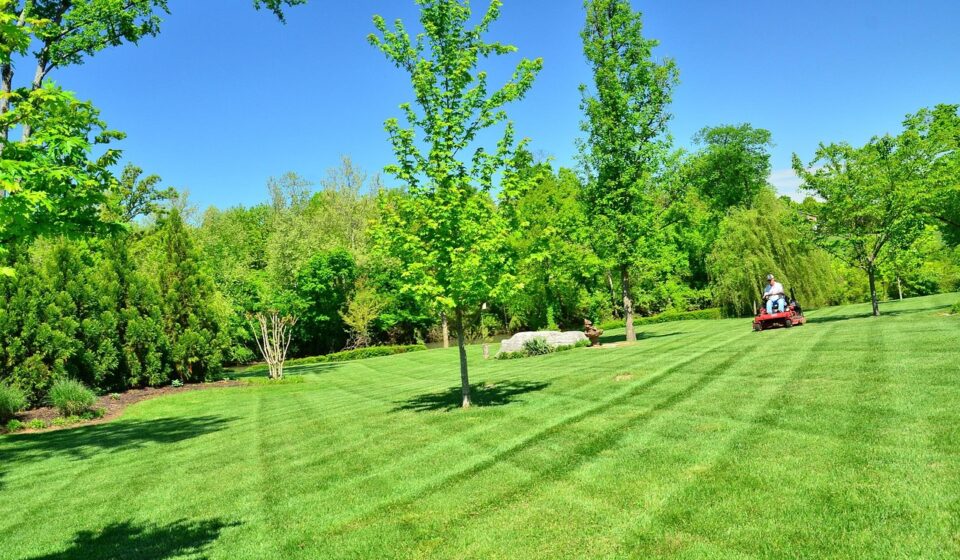
Effective lawn maintenance is not about adding more work to every weekend. It is about matching mowing, watering, fertilizing, aeration, and repair work to the grass type, soil condition, weather, and the way the outdoor space is used. In most cases, healthier turf starts with a few disciplined habits: mow at the right height, water deeply only when the lawn needs it, test soil before adding fertilizer or lime, and repair compacted or thin areas before weeds fill the gaps. Guidance from U.S. EPA WaterSense and university extension programs points in the same direction: lawns perform better when maintenance is measured, seasonal, and site-specific rather than automatic.
Start with the lawn’s real conditions
Before buying fertilizer, seed, irrigation parts, or a new mower attachment, assess the lawn as part of the full outdoor environment. Turf beside a patio, walkway, outdoor dining area, or garden furniture zone faces different pressure than a low-traffic side yard. Foot traffic, shade from buildings, reflected heat from paving, drainage patterns, pets, and irrigation overspray all influence turf growth.
A practical assessment should answer five questions:
- What type of grass dominates the lawn: cool-season turf such as tall fescue and Kentucky bluegrass, or warm-season turf such as zoysia and bermudagrass?
- Where does water collect, run off, or fail to soak in?
- Which areas are compacted by walking, furniture placement, children’s play, or equipment?
- Is the soil pH and nutrient level known from a laboratory soil test?
- Does the lawn need to be functional and durable, or mainly serve as a visual green surface around outdoor living areas?
This step matters because many lawn problems are easy to misread. Thin turf near a seating area may be caused by compaction rather than a lack of fertilizer. Brown edges along paving may point to heat stress or shallow soil, not disease. A damp patch near a sprinkler head may need irrigation adjustment, not more seed.
Mow for root health, not just appearance
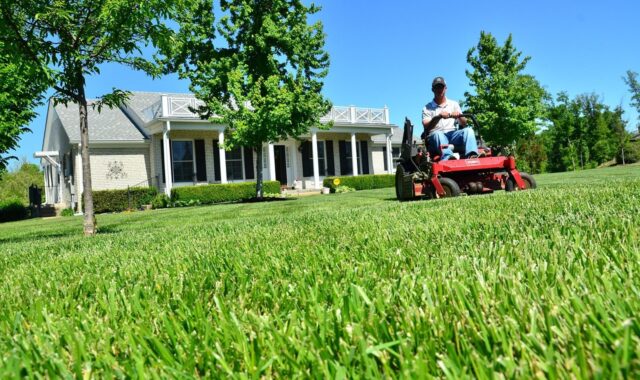
Mowing is the most frequent lawn maintenance task, and it directly affects root depth, weed pressure, drought tolerance, and the overall look of the yard. University extension guidance generally recommends removing no more than one-third of the grass blade in a single mowing. Cutting more than that can shock the plant, expose soil to sunlight, and reduce resilience during hot or dry periods.
The right mowing height depends on the turf type. The ranges below reflect commonly cited extension recommendations and should be adjusted for local conditions and cultivar differences.
| Turf type | Typical mowing height | Maintenance note |
|---|---|---|
| Tall fescue | 3 to 4 inches | Use the higher setting during hot, dry weather. |
| Kentucky bluegrass | 2.5 to 3.5 inches | Avoid cutting too short during summer stress. |
| Fine fescue | 3 to 4 inches | Often performs well with less frequent mowing. |
| Zoysia | 1.5 to 2.5 inches | Best maintained during its active warm-season growth. |
| Bermudagrass | 1 to 1.5 inches | Requires more precise mowing for a dense surface. |
Sharp blades are also part of good lawn maintenance. Dull blades tear leaf tips, leaving a brown or frayed appearance and increasing plant stress. Inspect the blade at the start of the growing season, then sharpen or replace it when cut quality declines. Mow when the grass is dry, avoid mowing dormant turf during severe heat or drought, and change mowing direction periodically to reduce ruts.
In most established lawns, finely chopped clippings can stay on the turf. University extension sources note that clippings decompose quickly and return organic matter and nutrients to the soil. Bag clippings only when they are too long, wet, diseased, or likely to mat on the surface.
Water by need instead of a fixed schedule
Watering is often where lawn maintenance costs and waste show up first. U.S. EPA WaterSense states that outdoor water use accounts for more than 30 percent of total household water use on average and can be much higher in arid regions. The same EPA program notes that inefficient irrigation methods and systems can lose a large share of outdoor water to wind, evaporation, and runoff.
For many established lawns in active growth, a broad benchmark is about 1 inch of water per week from rainfall and irrigation combined. This is not a rule to apply without checking conditions. Soil texture, shade, grass type, slope, local rainfall, and seasonal temperatures all change the actual requirement. A lawn in clay soil on a slope may need shorter repeated watering cycles, while sandy soil may dry faster and require different timing.
Use simple field checks
Instead of running sprinklers simply because the controller says it is time, check the lawn. Drought stress can appear as a dull blue-gray or blue-green color, folded or narrow-looking blades, and footprints that remain visible for several minutes after walking. A screwdriver, trowel, or soil probe can help confirm whether moisture is reaching several inches into the soil.
The tuna can method is a simple way to measure sprinkler output. Place shallow containers around the lawn, run the sprinkler, and time how long it takes to collect about half an inch of water. That gives a practical baseline for splitting irrigation into one or two weekly sessions, then adjusting for rainfall and heat.
Prevent runoff and overspray
Water that runs down a driveway or sprays patio furniture is not helping the turf. Adjust sprinkler heads so water lands on the lawn, not on paving, walls, seating areas, or outdoor storage. On compacted clay or sloped areas, use cycle-and-soak watering: run the zone briefly, pause to let water infiltrate, then run it again if needed. This reduces runoff and helps water reach the root zone.
Smart irrigation technology can help, but it does not replace inspection. EPA WaterSense reports that replacing a clock-based irrigation controller with a WaterSense labeled controller can reduce an average home’s irrigation water use by up to 30 percent. The biggest gains usually come when controllers are paired with working rain sensors, correct sprinkler pressure, clean nozzles, and seasonal schedule adjustments.
Base fertilizer and lime decisions on soil testing
Fertilizer should address a measured need, not serve as the default response to every lawn problem. A laboratory soil test can identify pH, texture, organic matter, phosphorus, potassium, and other factors that influence turf health. The University of Minnesota Extension recommends testing lawn and garden soil every three to five years and when making a major change, such as converting lawn to a garden bed.
Soil testing helps avoid two common mistakes: applying nutrients the lawn does not need and missing the nutrients or pH correction it does need. Nitrogen is often the nutrient lawns need most regularly, but phosphorus and potassium should be guided by test results. Over-application can waste money and contribute to water quality problems when nutrients move into runoff.
When fertilizer is needed, calculate the amount by lawn area and desired nitrogen rate instead of guessing. Measure the lawn square footage, read the fertilizer label, and apply with a calibrated spreader. A two-direction application at half rate in each direction can improve coverage and reduce striping. Keep fertilizer off hard surfaces; pellets on driveways, patios, and sidewalks should be swept back into the turf so they do not wash into storm drains.
Lime should also be based on a soil test. It is used to raise soil pH when soil is too acidic for the turf species, but many lawns do not need lime every year. Applying lime without confirming pH can make nutrient problems worse, especially around trees and shrubs that prefer more acidic soil.
Use aeration, overseeding, and thatch control as repair tools
Aeration is useful when soil is compacted, water fails to infiltrate, or high-traffic areas thin out. Core aeration removes small plugs of soil, creating channels for air, water, and roots. It is different from spike aeration, which can press soil sideways and sometimes increase compaction. For cool-season lawns, autumn is often the preferred time because the grass is actively growing and weed pressure is lower than in spring.
Overseeding helps restore density in cool-season lawns, especially after summer stress, pet damage, heavy use, or disease thinning. It works best when seed contacts soil, so mow lower than usual before seeding, remove loose debris, and consider aeration or light surface roughening. After seeding, the maintenance priority changes for a short period: keep the seedbed consistently moist until germination, then gradually return to deeper, less frequent watering.
Thatch control should be targeted, not routine. A thin thatch layer can cushion the surface and moderate soil temperature. Excessive thatch, often around 1 inch or more, can interfere with water movement, fertilizer performance, and seed-to-soil contact. Overwatering and excessive nitrogen can contribute to thatch buildup, especially in grasses such as zoysia, bermudagrass, and Kentucky bluegrass.
A seasonal lawn maintenance calendar
The timing below is a general framework for many U.S. lawns. Local extension calendars should be followed where climate, grass type, water restrictions, or fertilizer laws differ.
| Season | Main tasks | What to avoid |
|---|---|---|
| Early spring | Inspect winter damage, clean debris, service mower, test soil if due. | Heavy fertilizing before the lawn is actively growing. |
| Late spring | Mow consistently, manage weeds early, begin irrigation checks. | Scalping cool-season grass as temperatures rise. |
| Summer | Water deeply when needed, raise mowing height for cool-season turf, reduce traffic on drought-stressed areas. | Daily shallow watering and fertilizing dormant grass. |
| Early fall | Aerate compacted cool-season lawns, overseed thin areas, fertilize if recommended. | Seeding without soil contact or irrigation follow-up. |
| Late fall | Continue mowing until growth stops, clear leaves, winterize irrigation where needed. | Leaving thick leaf mats that smother turf. |
| Winter | Limit traffic on frozen or saturated lawns and plan soil or layout improvements. | Applying fertilizer on frozen ground or before heavy runoff events. |
Protect patios, furniture, and building edges while maintaining turf
For outdoor living spaces, lawn maintenance also means protecting surrounding materials. Poor sprinkler alignment can stain furniture, wet cushions, accelerate corrosion on metal frames, and encourage algae on paving. Fertilizer granules can mark hard surfaces if left to dissolve. Repeated mowing too close to deck posts, edging, or furniture legs can cause impact damage and uneven turf wear.
Keep a defined border between turf and hardscape where possible. Edging reduces grass invasion into paving joints and makes mowing cleaner. Around movable furniture, rotate placement or use stepping stones in high-traffic paths so chair and table legs do not create compacted bare spots. If an area is too shaded or heavily used for turf to thrive, consider a more suitable groundcover, mulch bed, gravel zone, or paving extension rather than forcing grass to grow where conditions do not support it.
Common lawn maintenance mistakes
- Mowing too short: This weakens roots and increases heat and drought stress, especially in cool-season grasses.
- Watering every day: Frequent shallow watering encourages shallow roots, runoff, and disease pressure.
- Fertilizing without a soil test: This can waste nutrients, miss pH problems, and contribute to runoff.
- Ignoring compaction: Thin turf in high-use zones often needs aeration or traffic redesign, not just seed.
- Using one schedule for the entire property: Sunny slopes, shaded corners, and patio edges usually need different maintenance decisions.
Frequently asked questions
How often should a lawn be mowed?
Mow as often as needed to remove no more than one-third of the grass blade. During fast spring growth, that may mean more than once a week for some cool-season lawns. During heat, drought, or dormancy, mowing may slow down or pause.
Is one inch of water per week always enough?
One inch per week from rain and irrigation is a useful starting point for many established lawns in active growth, but it is not universal. Soil type, grass species, slope, temperature, wind, shade, and rainfall patterns all affect water needs.
Should grass clippings be bagged?
Usually no. Short, dry clippings can be mulched back into the lawn, where they return organic matter and nutrients. Bag them if they are wet, excessive, diseased, or forming clumps that block sunlight.
How often should soil be tested?
For many lawns, testing every three to five years is enough unless there is a major change, persistent poor growth, a new lawn installation, or suspected contamination. Use a laboratory soil test rather than relying only on visual symptoms.
When is aeration most useful?
Aeration is most useful when soil is compacted, water runs off, roots struggle, or high-traffic areas thin out. For cool-season lawns, early fall is often preferred. For warm-season lawns, aerate during active warm-season growth.